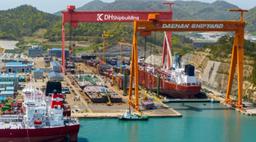
Japan is set to prioritize artificial intelligence and robotics in ship repair as part of a broader effort to revitalise its shipbuilding industry, according to the country’s Prime Minister.
Japan has held steady as the world’s second-largest shipowning nation, with a fleet valued at USD 233 billion, largely unchanged from 2025. As it continues to dominate several key shipping segments, on 10 April, the Japanese government announced a series of measures to encourage public–private investment in the sector, including the adoption of AI and robotic technologies for domestic ship maintenance under Prime Minister Sanae Takaichi’s revival plan.
At present, most ship repairs in Japan are carried out on domestic vessels, while around 90% of internationally operating ships, such as oil tankers, are serviced overseas. The government aims to strengthen domestic repair capacity to support more stable maritime transport.
In addition, Japan has set a target of doubling annual ship construction by 2035 and has highlighted the need to reinforce supply chains for key vessel components, including sonar systems and propellers.
According to local media, to support these initiatives, the government plans to allocate a 120-billion-yen fund through the fiscal 2025 supplementary budget to promote investment in the sector.
It will also continue discussions on establishing a framework for building liquefied natural gas (LNG) carriers.
Shipbuilding has been identified as one of 17 priority investment areas within a broader growth strategy expected to be finalised later this summer.
"We will do our best and lead efforts to contribute to the realization of a strong Japanese economy. "Transport Minister Yasushi Kaneko said at a ministry meeting on 10 April.
Source: Safety4sea
Robban Assafina is now on WhatsApp channel. Click Here