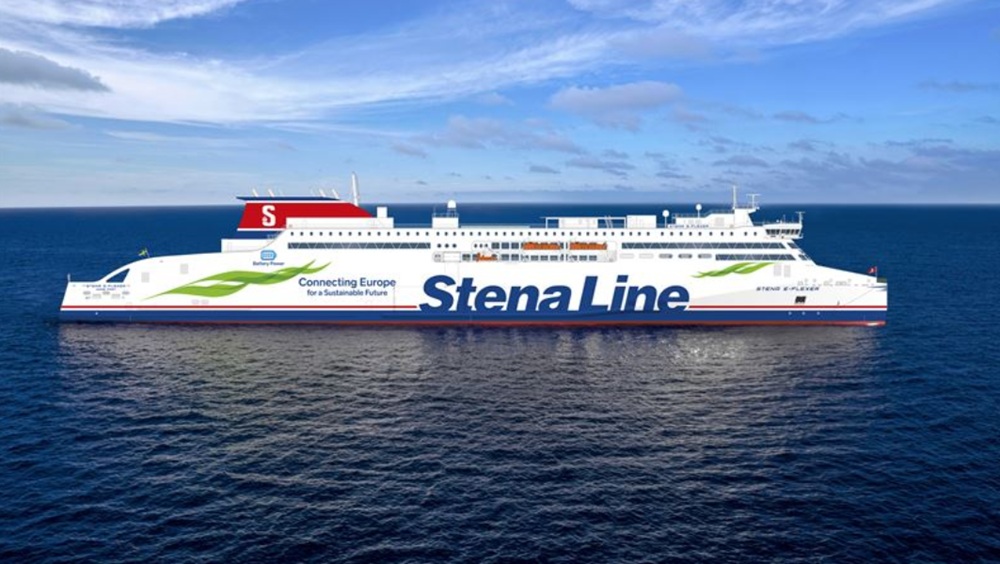
Stena Line is renewing its fleet and has placed an order for two new hybrid E-Flexer ferries, scheduled to enter service in 2030.
The two RoPax ferries will have capacity for 1,500 passengers and 2,750 lane metres of freight. Designed as day ferries, they are intended to operate on the Gothenburg–Frederikshavn route. The vessels will feature the latest hybrid propulsion technology, allowing them to operate on both conventional fuel and electricity. They will also be prepared for conversion to 100 percent electric operation once the necessary charging infrastructure is in place.
“This is a historic investment for Stena Line, giving us the opportunity to take further steps towards the sustainable modernisation of our fleet. The two new ferries will strengthen our customer offering by taking the travel experience to a new level. At the same time, we are future-proofing our own CO₂ reduction targets while preparing for the stricter environmental requirements ahead,” says Niclas Mårtensson, CEO of Stena Line.
The vessels currently operating on Stena Line’s Gothenburg–Frederikshavn route, Stena Danica and Stena Jutlandica, have served the route for many years. Stena Danica entered service on the route as early as 1984, while Stena Jutlandica followed in 1996.
Increased freight capacity
The newly ordered vessels are scheduled to enter service between Gothenburg and Frederikshavn in 2030. However, as Stena Line always strives to maintain flexibility and redundancy across its fleet, the vessels will also be capable of operating on other daytime routes within the company’s network.
“Our existing vessels have been fantastic workhorses and have served us extremely well on our Denmark route for many years, but the next generation of E-Flexers will represent a major step forward for both our passengers and freight customers. They will enable us to offer a highly attractive and modern product, with significant improvements in sustainability, comfort, the onboard experience and freight capacity,” says Christina Bromander, Trade Director for Stena Line’s Denmark routes.
She continues:
“With the new vessels, we are increasing our freight capacity, which we believe will be particularly valuable in connection with our upcoming move to a new port location in Arendal. The conditions there are excellent for developing our freight business, with opportunities for increased intermodality thanks to the rail connection.”
The two new vessels will become the sixth and seventh E-Flexers in Stena Line’s fleet. The first entered service in 2019, and today three E-Flexers operate on the Irish Sea and two between Sweden and Poland.
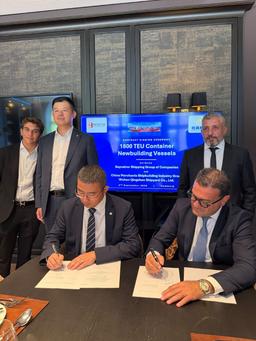
The vessels will be built at the China Merchants Industry Weihai Shipyard in China, which has so far built 15 E-Flexers.
“This major investment demonstrates Stena Line’s long-term commitment, our determination to prioritise the sustainable transition and our confidence in the continued strong development of the Gothenburg–Frederikshavn route,” concludes Niclas Mårtensson.
E-Flexer 2.0 – facts and figures
- Length: 214.5 metres
- Width: 27.8 metres
- Three vehicle decks – one for passenger vehicles and two for freight
- Freight capacity: 2,750 lane metres
- Passenger capacity: 1,500
- Designed as a day ferry, with 132 cabins for crew and passengers
- Will be built at China Merchants Industry Weihai Shipyard, China
- Expected delivery: 2030
Robban Assafina is now on WhatsApp channel. Click Here