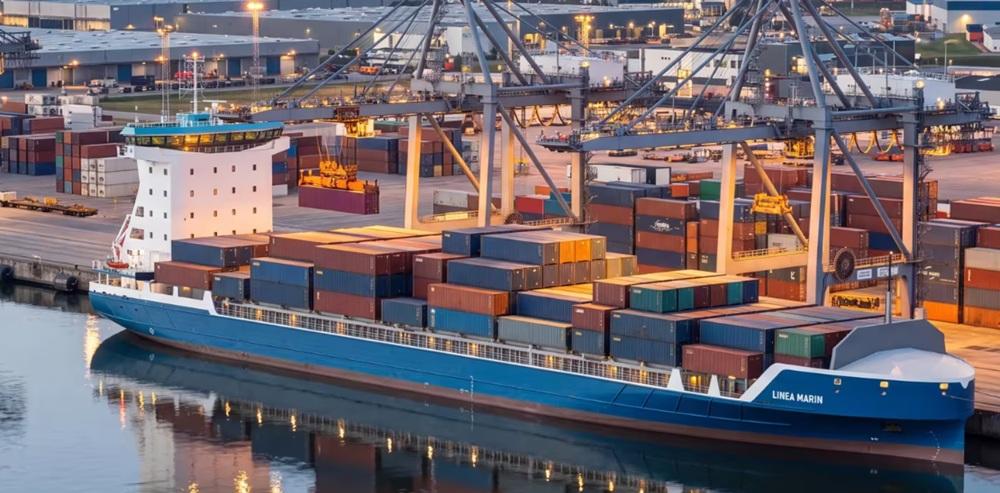
In an era where the future of maritime communications is being reshaped by the rapid evolution of wireless technologies, driven by 5G and beyond, the maritime sector is undergoing a significant transformation across vessels, ports, and offshore operations. This shift relies on ultra-reliable, high-capacity, and low-latency connectivity to support safer navigation, smarter fleet management, real-time monitoring, and advanced autonomous systems.
In this issue of Robban Assafina, maritime experts talk about how the industry is becoming increasingly dependent on advanced digital communication systems and explain the challenges facing this evolving sector.
5G Adoption
The maritime industry is increasingly reliant on advanced digital communication systems to enhance operations, safety, and efficiency. Tore Morten Olsen, President, Maritime, Marlink, states that 5G technology is playing a growing role in maritime communications, with trials extending its reach several nautical miles offshore using coastal base stations and mesh repeaters. As for shipowners, these developments signal a shift from traditional satellite-only communications toward high-bandwidth, low-latency hybrid connectivity, allowing vessels to remain online while near shore and during shortsea transits.
Olsen adds, “The growth of 5G in maritime aligns with broader industry goals: smarter fleet operations, predictive maintenance, and greater automation, making it a key contributor to digital transformation at sea.”
From David Bunting, Director, Cellular & Wireless Product Management at Speedcast’s viewpoint, 5G adoption in the maritime sector is occurring in a layered, hybrid fashion. Ports and terminals are leading the charge with private 5G networks that power automation, robotics, high-definition surveillance, and AI-driven logistics management. Shoreside, vessels benefit from coastal 5G coverage for high-speed data transfer while in port, enabling rapid exchange of large manifests, customs documentation, and media updates for crew welfare.

David Bunting
Bunting also explains that beyond the shoreline, ship-based microcells and multi-hop relays are extending local coverage onboard. Increasingly, vessels are deploying private LTE or 5G networks to connect hundreds of onboard sensors and systems, improving operational visibility and maintenance efficiency even when offshore connectivity is limited. These local networks, supported by edge computing, allow real-time analytics and decision-making, with only key data transmitted to shore to conserve bandwidth.
As for Alaa Alsadi, VP Commercial – Energy at IEC Telecom, the adoption of 5G in the maritime sector is steadily growing as the industry moves toward more digital, data-driven operations. Today, we see 5G playing an important role mainly in ports and coastal corridors to power automation, high-definition video analytics, and smart logistics systems.

Alaa ALsadi
Alsadi believes that it is also increasingly used across offshore industrial sites, deploying private LTE/5G networks, powered by satellite, around platforms and wind farms to support worker safety, real-time monitoring, and remote operations.
“What we are seeing now is that 5G is becoming an important extension of the maritime connectivity landscape, creating a stronger hybrid ecosystem and adding new performance layers to environments where terrestrial networks are available.”
Benefits of 5G Integration
With the growing use of digital technologies, there are specific maritime applications that stand to benefit the most from 5G integration, particularly in transforming vessel-to-shore and ship-to-ship communications, as well as onboard operations. David Bunting says that 5G’s low latency and high bandwidth are transformative for both port and vessel operations, as in ports it enables real-time automation of cranes and vehicles, predictive maintenance of assets, and AI-assisted logistics, improving efficiency, safety, and turnaround times.
Bunting continues, “Onboard, 5G-connected IoT ecosystems drive predictive maintenance and advanced diagnostics through continuous high-speed data collection from critical systems. Real-time monitoring of engines, cargo, and environmental parameters enhances reliability and compliance, while AI analytics enable smarter decision-making and condition-based maintenance. Crew welfare, safety, and environmental monitoring also benefit from real-time video and high-speed data transfer capabilities.”
From another viewpoint, Alaa Alsadi states that 5G has the greatest impact on applications that require high bandwidth, low latency, or dense sensor data, particularly in areas close to shore. When vessels enter 4G/5G coverage near ports or coastal corridors, they can offload large volumes of operational data, enabling faster maintenance planning, real-time engine performance analysis, and rapid software updates.
“For vessel-to-shore and ship-to-ship communications, the key transformation comes when 5G is embedded inside a hybrid architecture where satellite remains the backbone. In this model, 5G handles the data-heavy tasks during short coverage windows, while satellite ensures seamless communication during long offshore transits. The two technologies together create a more intelligent, flexible, and cost-efficient operational environment for maritime operators.”

Tore Morten Olsen
From another level, Tore Morten Olsen says that shipowners are seeing the greatest impact in three operational domains, which shift more vessels toward data-driven, higher-efficiency operations with closer integration to fleet management platforms. 5G technology allows real-time streaming of engine, navigation, and environmental data to shoreside control centers.
Olsen explains, “Remote technical support, video conferencing, and even remote inspection become more reliable and cost-effective. The low latency means vessels can connect without delay, enabling secure networks for business and safety. Lastly, 5G can be used as a parallel channel to provide crew with high-speed internet, first for social welfare and as a platform for training using cloud-based systems previously limited by bandwidth constraints.”
5G Common Challenges
With the transformation toward 5G via satellite, there are primary challenges in extending 5G coverage to remote sea routes and offshore areas, such as signal propagation limits, infrastructure constraints, and maritime spectrum availability. All three experts confirm that because 5G, especially in higher frequency bands, is highly line-of-sight dependent, coverage typically fades beyond 50-70 km from shore. In addition, building offshore towers across global shipping routes is neither practical nor economical, and moving vessels introduce complex handover scenarios. Weather, corrosion, and the lack of coastal infrastructure on remote routes further restrict wide-area maritime deployment.
As a result, the industry is shifting toward hybrid connectivity that integrates 5G/LTE near shore with multi-orbit satellite networks (LEO, MEO, GEO) for deep-sea operations. Satellite remains the only technology capable of providing consistent global coverage, while 5G offers high capacity when vessels are closer to land. Emerging Non-Terrestrial Network (NTN) standards enable seamless switching between terrestrial and satellite layers, creating a unified communication ecosystem that ensures continuous, reliable connectivity throughout an entire voyage.
6G Evolution
While 5G is still being deployed, discussions have already begun about 6G and beyond. Experts say that by 2030, 6G is expected to become commercially available, as it promises ultra-high data rates—reaching terabits per second—and near-zero latency, unlocking new dimensions of automation, remote operation, and machine intelligence. However, due to the emergence of LEO networks, the speed and latency hurdles are already being overcome, which means that maritime users will not experience any dramatic improvements in quality of service or performance.
Additionally, with 6G, integrated AI networks will enable more automated operations. Remote piloting when entering ports, as well as AR or VR for remote troubleshooting, inspections, and maintenance, will become practical realities.
Environmental Impact
As 5G and next-generation communication technologies contribute to greener and more energy-efficient maritime operations, they play a major role in helping the maritime industry operate more efficiently and sustainably, as Alsadi states. “By enabling continuous, high-quality data flow between ship and shore, these networks allow vessels to optimize routes, adjust speed more intelligently, and monitor engine health in real time, all of which reduce fuel consumption and emissions and enable a fully digitalized decision-making ecosystem.”
Bunting believes that thousands of connected sensors can continuously monitor fuel consumption, route efficiency, and equipment performance, allowing vessels and ports to optimize operations in real time.
He explains, “This data-driven approach reduces unnecessary fuel use, emissions, and idle time, while supporting predictive maintenance to prevent wasteful mechanical inefficiencies. Additionally, 5G-powered automation and remote inspection capabilities reduce the need for travel and on-site manual intervention, further minimizing environmental impact.”
From Olsen’s point of view, with integration into a hybrid network alongside LEO and VSAT satellite connectivity, 5G can support the sustainability goals of shipowners. Available applications include real-time weather forecasts, tide and current data, which can increase voyage optimization and reduce fuel consumption.
Olsen adds, “The same approaches can be used to coordinate with just-in-time port arrivals, minimizing idle emissions while at anchor. Many of these capabilities enable shipowners to move towards more sustainable operations and demonstrate measurable ESG performance. Connectivity constraints will, in the future, no longer be the reason for not meeting ESG objectives.”
Technological Readiness and Regulatory Alignment
In this major transformation, there are key steps to prepare for the transition to next-generation communication technologies, ensuring both technological readiness and regulatory alignment. All the experts agree that these steps begin with building a flexible, future-proof digital infrastructure. Shipowners should adopt a hybrid strategy that integrates multi-orbit satellite, LTE/5G, and intelligent network-management systems to ensure high-capacity connectivity near shore and uninterrupted coverage at sea.
Additionally, this involves upgrading onboard networks with IoT, edge computing, and cloud-ready architectures, while ensuring systems are interoperable and aligned with IMO, ITU, and 3GPP standards. Strong cybersecurity and clear data-governance frameworks are equally essential.
Lastly, by engaging early with technology partners and piloting private LTE/5G and hybrid solutions, operators can ensure a smooth transition and position their fleets to take advantage of emerging capabilities such as AI-driven optimization, automation, and remote operations.
|
To read the full content, click on the following link: Robban Assafina, Issue 100, Nov/Dec 2025, Maritime Host, pg. 65-66 |