
While most of the world sails on autopilot, a new generation of shipowners is charting a different course, not only by operating vessels efficiently but also by navigating an industry that is simultaneously traditional, highly regulated, and rapidly evolving.
In this issue, Robban Assafina is shedding light on young experts from the maritime industry by sharing their experiences, the lessons shaping their leadership, and the priorities guiding their decisions in today’s dynamic maritime industry.
Shaped by Experience
Early exposure and personal experience often define how young shipowners approach leadership. In this context, Natalie Sallaum, Chief Relations Officer at Sallaum Lines, says that shipping was always present in her life, but choosing to be involved was a conscious decision. “What inspired me was seeing how this industry quietly moves the world while carrying immense responsibility. Joining this industry over the years showed me that leadership in shipping today is not about tradition alone. It’s about discipline, accountability, and the courage to modernize without losing operational integrity.”

Natalie Sallaum
As for Atef Abou Merhi, Managing Director at Pelagic Partners, he explains that he grew up in a shipping family and is now the second generation, with the first vessel acquired by his father 30 years ago. Abou Merhi continues, “This gave me the opportunity to experience the industry first-hand from an early age. Although I always had the option to choose a different path, I was drawn to shipping because of the quiet but immense influence it has on the global economy. It is an industry that operates largely under the radar yet plays a critical role in keeping the world functioning.”
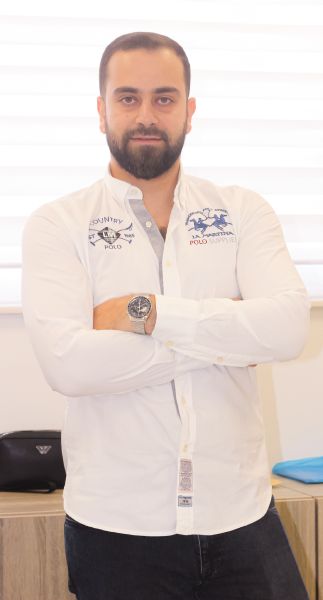
Abdullah Bayazid
From Abdullah Bayazid, CEO of Florence Shipping & Trading viewpoint, his experience combines formal maritime education with hands-on leadership of a family-owned shipping company. Trained in Greece and rising to Chief Officer, he brings operational expertise and a deep understanding of fleet management. Leading Florence Shipping & Trading, a company with eight vessels spanning multiple markets, Abdullah draws on his family’s long-standing maritime experience while implementing practical strategies for fleet growth, route management, and commercial operations.
MENA at the Helm
As the MENA region is emerging as a strategic maritime hub, there is a vision among young shipowners regarding their role in global trade, particularly the responsibilities they hold in shaping the region’s maritime future. In this context, all the experts confirm that this underscores the importance of regional presence and operational consistency, as MENA is no longer just a transit region; it is increasingly a decision-making and investment hub for maritime, energy, and logistics.
Young shipowners also have a responsibility to use this period of exceptional regional growth to help move the industry from fragmented, regional-scale operations toward internationally relevant platforms.
Digital Transformation
With the major role AI and new technologies are playing in the lives of the younger generation, there are clear steps to be taken to transfer this digital familiarity and innovation into the shipping industry. Here, Sallaum shares that it is all about being practical, as digital tools should improve decision-making, not complicate it. “We focus on data visibility, performance monitoring, and automation that supports crews and management rather than replacing human judgment. The goal is efficiency, clarity, and consistency across operations.”
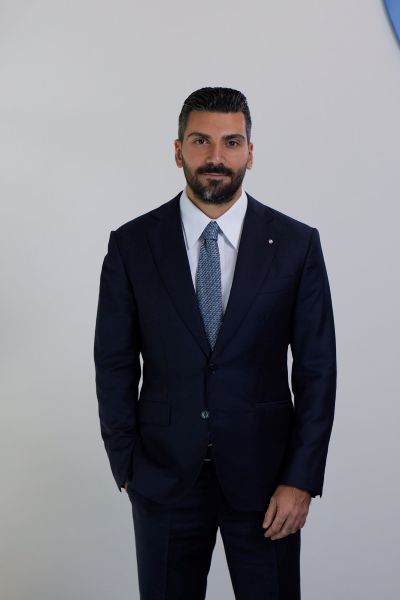
Atef Abou Merhi
From another viewpoint, Atef Abou Merhi explains, “Shipping has always adopted technology later than most industries, partly because of its fragmented nature and long asset lifecycles. Coming from a younger generation, digital tools feel natural rather than disruptive. Over the past period, we have been actively evaluating and testing AI-driven systems that support fuel-efficiency optimization and route planning, helping crews and operators make better day-to-day decisions at sea.”
Abou Merhi adds, “These systems are still at an early stage, but the direction is clear. That said, shipping has always been, and will remain, a relationship-driven industry.”
Navigating the Automation Era
Vessel automation is advancing rapidly, especially regarding the level of autonomy for commercial fleets over the next decade, and how the industry is preparing to adapt to this shift. The experts believe that human oversight will remain essential, and the vision of automation becoming deeply embedded in vessel operations is not expected.
Additionally, as crews have been the cornerstone of this industry for thousands of years, preparation means investing in crew training, cybersecurity, and systems integration so that technology enhances safety and reliability rather than creating new risks.
Prioritizing Safety
The shipping industry faces major challenges, including safety, sustainability, profitability, and compliance with environmental regulations. Abou Merhi believes that these topics are not separate items but rather parts of the same system. Over time, he has also come to believe that safety is the foundation upon which everything else is built. Without safe operations, sustainability becomes theoretical, and compliance becomes reactive rather than embedded.
Abou Merhi adds, “At the same time, experience has also taught me that profitability is the condition for survival. You can focus on many important aspects, but if a company consistently burns cash through a down-cycle, the discussion ends there.”
On another level, Abdullah Bayazid ensures that safety is not only a protocol but a daily practice. At the same time, he maintains a balanced leadership approach that combines firm oversight with practical flexibility, enabling the company to adapt effectively to operational challenges, market fluctuations, and unforeseen circumstances, all while safeguarding profitability, efficiency, and long-term operational sustainability.
| Read More: The New Era of Maritime Connectivity: Hybrid Networks, 5G Growth, and Future Technologies |
As for Sallaum, she confirms that safety comes first. “Without a strong safety culture, nothing else is sustainable. A safe operation protects people, assets, and reputation. From there, sustainability and profitability must work together. If green solutions are not commercially viable, they won’t scale. The real challenge is integrating all four priorities into one coherent strategy.”
Decarbonization in Practice
As decarbonization has become a necessity in shipping, discussions continue around which fuel solutions or emerging technologies are the most viable for shipowners’ fleets. Regarding this, Abou Merhi says that decarbonization is no longer a distant discussion; it is already influencing asset values, chartering decisions, and access to financing. At the same time, there is still no clear consensus on which fuel pathway will dominate. Each option involves compromises between cost, infrastructure, safety, and regulatory readiness.
From a fleet and capital allocation perspective, flexibility is key, Sallaum states. “Vessels must be designed to adapt as fuel technologies, regulations, and market conditions evolve, rather than locking into a single long-term assumption.”
As decarbonization becomes a necessity in shipping, environmental regulations are tightening, and the IMO is introducing stricter emission standards. Here, the experts believe that environmental regulation is becoming a permanent feature of shipping rather than a temporary challenge, and young shipowners have an important role in pushing the industry forward by proving that sustainability and commercial discipline can coexist.
Future Outlook
With the shipping industry evolving over the next 10-15 years, there are strategic choices young shipowners should make today to remain relevant, competitive, and responsible in the future. Natalie Sallaum says that shipping will become more regulated, more transparent, and more technologically driven, and that scale alone will not guarantee success.
Sallaum continues, “Strategic clarity, fleet quality, and strong governance will matter more than ever. The choices young shipowners make today will define whether they are operators of assets or leaders of resilient, future-ready companies.”
As for Abou Merhi, he explains, “We are moving into a phase we have not seen for a while: large orderbooks scheduled to enter the market, combined with extensive scrapping of older tonnage. This will lead to structural changes in fleet composition and cost structures, and it is also raising barriers to entry compared to previous cycles. These barriers are no longer only financial. They are increasingly driven by regulation, stricter compliance standards, KYC requirements, and more demanding funding conditions.”
Abou Merhi concludes that for young shipowners today, the challenge is not only to grow, but to remain disciplined. “This means strengthening balance sheets, investing responsibly in fleet efficiency, investing in the people around you, and creating platforms that attract long-term capital rather than short-term speculation. If this is done correctly, sustainability becomes a result of good capital allocation and operational discipline, not a slogan. As I learned early on, shipping does not reward speed. It rewards endurance.”
Robban Assafina is now on WhatsApp channel. Click Here
|
To read the full content, click on the following link: Robban Assafina, Issue 101, Jan/March 2026, Maritime Host, pg. 76 |