- The security of waterways is an international responsibility, and any threat to them is a threat to the lifeline of the global economy
- Human capital is the most important and valuable investment for any organization seeking sustainable success
- Our vision for the next decade is built around two key pillars: strategic expansion and digital transformation
At a time when the shipping sector is undergoing rapid transformation at both regional and international levels, building a strong Kuwaiti maritime sector capable of keeping pace with change and strengthening its contribution to the national economy has become increasingly important.
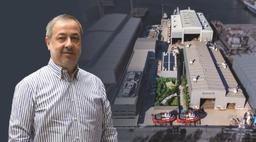
In this interview with Robban Assafina, Mr. Jaafar Naseeb, Vice Chairman and Chief Executive Officer of Naseeb Maritime Company, discusses the key features of Kuwait’s maritime landscape, the challenges facing companies operating in the sector, the impact of geopolitical conditions on maritime traffic, as well as quality, health, safety and environmental matters, the development of national talent and the company’s vision for the years ahead.
Given Naseeb Maritime Company’s history dating back to 1955, how do you assess the current state of Kuwait’s maritime sector, and what are the most notable developments you have observed?
Kuwait is currently at a pivotal and highly significant stage in the history of its maritime sector. We are witnessing rapid developments that reflect the government’s deep recognition of the sector’s importance as a vital artery of the national economy and a strategic pillar supporting the oil sector. The current outlook points to genuine growth, most clearly demonstrated by the major strategic Mubarak Al-Kabeer Port project. We consider this project a transformational development whose positive impact will extend beyond Kuwait, positioning the country as a major logistics and trade hub in the northern Arabian Gulf and the wider region.
Alongside major projects, what does Kuwait need to transform the development of its maritime infrastructure into tangible opportunities for the private sector and maritime investment?
In addition to these megaprojects, we are seeing continuous and determined efforts to expand and modernize existing ports, including Shuwaikh Port and Shuaiba Port. These efforts include increasing permissible draughts, upgrading infrastructure and introducing advanced technologies for operations and cargo-handling management. Such measures help increase handling capacity, reduce vessel waiting times and enhance Kuwait’s regional competitiveness, with positive effects on trade flows and supply chains. It is important for these efforts to be accompanied by the creation of a supportive environment for the private sector and by enabling maritime companies to expand and develop their services.
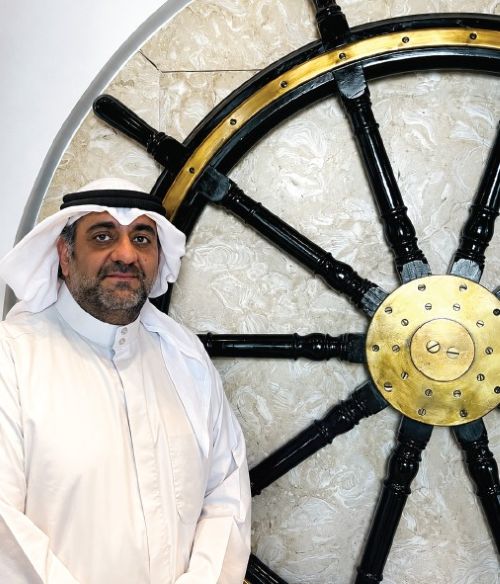
Jaafar Naseeb
As a leading national company operating in this field since the middle of the last century, what are the main operational challenges and obstacles you currently face within Kuwait’s maritime business environment?
Our continuity and success from 1955 to the present would certainly not have been possible without the ability to adapt. Today, however, we face structural challenges that require intervention and fundamental solutions from the relevant authorities.
The most pressing challenge for us and many other maritime companies concerns supporting infrastructure, particularly the shortage of safe lay-up and berthing facilities for marine craft and vessels when they are out of service or not assigned to active projects. This issue is compounded by excessively high current berthing and lay-up fees, coupled with an almost complete lack of suitable and cost-effective alternatives that take companies’ operating costs into consideration.
What key decisions or measures would you like the relevant authorities to adopt to address these challenges and create opportunities for private-sector growth in the maritime industry?
Another issue, which has an even greater impact on our expansion opportunities, is the limited scope available for maritime companies to grow their operations. As specialized companies, we urgently need strategic land allocations, particularly sites close to the coast, to establish maintenance workshops, marine equipment warehouses and logistics support facilities. The failure to provide companies with adequate space for expansion hinders their ability to compete and develop their services, while limiting the private sector’s potential to contribute effectively to the national economy. We look forward to establishing a genuine partnership with state institutions to overcome these obstacles and create an attractive and supportive environment for maritime investment.
Amid rapidly evolving geopolitical developments, the prevailing political conditions and the ongoing conflict, how have these tensions affected maritime traffic, and what challenges have they created?
It is widely recognized that shipping is among the sectors most sensitive and vulnerable to geopolitical and security conditions.
The tensions we are witnessing today, together with the threats facing shipping lanes as a result of attacks affecting Gulf countries and the wider region, present an extremely serious challenge. This escalation has cast a heavy shadow over the entire maritime sector in Kuwait and the Arabian Gulf.
How does Naseeb Maritime Company manage risk in practical terms amid route changes and rising marine insurance costs?
From an operational perspective, these conditions have caused clear disruption to supply chains and forced many vessels to alter their routes or adopt exceptional security measures, significantly increasing voyage durations and operating costs. We are also facing an unprecedented rise in marine insurance and war-risk insurance premiums, which places an additional burden on shipowners and operators.
At Naseeb Maritime Company, we monitor developments closely and take every precautionary measure necessary to safeguard our crews and fleet. At the same time, we emphasize that the security of waterways is an international responsibility, and any threat to them is a threat to the lifeline of the global economy.
Safety is fundamental to every maritime activity. How do you translate this principle into daily practice within the company?
Safety is a non-negotiable priority. We invest heavily in the continuous training of our seafarers and technical personnel on the latest safety and risk-management protocols. Our aim is to maintain a safe, incident-free working environment and protect lives, property and the marine environment in which we operate.
How do you view the role of national talent in the maritime sector, and what role does Naseeb Maritime Company play in attracting and developing young Kuwaitis for careers in this vital industry?
Human capital is the most important and valuable investment for any organization seeking sustainable success, particularly because the maritime sector is highly specialized and requires precise technical and managerial expertise. We have a national responsibility to transfer the experience accumulated over many decades to the next generation. We also continuously strive to create an attractive working environment for young Kuwaitis and encourage them to pursue various maritime disciplines, including marine engineering, navigation, commercial management and logistics.
What message would you give to young Kuwaitis who may be hesitant to choose the maritime sector as a career path?
We believe that combining the enthusiasm and modern outlook of young people with the wisdom and experience of the company’s pioneering generation creates the ideal foundation for sustaining our development and fulfilling Kuwait’s future ambitions. The maritime sector needs skilled national professionals who are willing to learn, develop and assume responsibility across a wide range of technical and managerial disciplines.
Following all these achievements and challenges, what is your vision for Naseeb Maritime Company over the next decade?
Our vision for the next decade is built around two key pillars: strategic expansion and digital transformation. We plan to diversify our portfolio of maritime services and increase the size and capabilities of our fleet to meet growing demand, particularly as Kuwait’s major projects move forward. We are also investing in digital transformation and process automation to improve operational efficiency and deliver outstanding services to our clients.
Finally, how do you envision Kuwait’s maritime standing by 2035, and what do you hope the sector will achieve in the coming years?
Our ultimate objective is to remain Kuwait’s trusted maritime partner and contribute effectively to achieving the New Kuwait 2035 Vision by helping transform the country into a regional and international financial, commercial and service hub, while preserving our longstanding legacy and firmly established principles. We believe that developing the maritime sector, strengthening infrastructure, empowering the private sector and investing in people and technology are all interconnected elements in building a stronger and more sustainable maritime future.
Robban Assafina is now on WhatsApp channel. Click Here
|
To read the full content, click on the following link: Robban Assafina, Issue 103, July/Sep 2025, Maritime Host, pg. 72 |