As the maritime sector faces increasingly complex risks, evolving regulatory requirements and growing geopolitical uncertainty, the role of marine insurers is expanding beyond traditional coverage to include specialized expertise, responsive claims support and strategic risk guidance.
In this interview, Amir H. Mosadeghi, CEO of IPANDI, shares his perspective on the organization’s international growth, its approach to P&I and marine risk management, global claims support, emerging growth markets and the evolving challenges facing shipowners and the wider maritime industry.
IPANDI has grown from an OISA initiative in 1996 into a global P&I provider. What key strategies drove this international expansion?
IPANDI’s growth has followed a deliberate sequence rather than geographic expansion alone. OISA and the participating Member States provided the institutional foundation; from there, we built credibility through disciplined risk selection, consistent claims performance, technical expertise and strong operational relationships across the maritime sector. We then established offices in Dubai, London, Athens and Jakarta so decision-making could remain close to major shipping centres. Product development was another essential element, widening the solutions available to shipowners and charterers as their operations became more complex. Through IPANDI UK, we can provide Hull & Machinery cover of up to USD 10,000,000, supported by A-rated securities. This combination of financial capacity, regional access and practical service has enabled measured growth while preserving underwriting standards. Our aim is not to be present everywhere in name, but to be dependable wherever an entered vessel requires assistance.
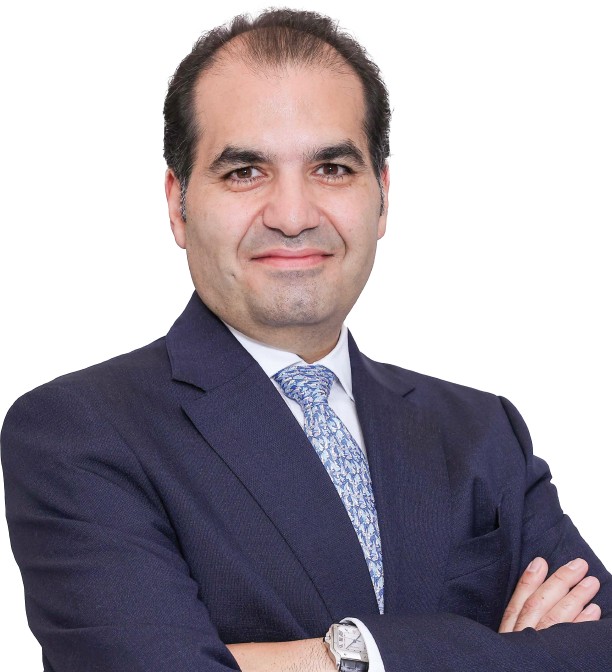
Amir H. Mosadeghi
How does IPANDI tailor its P&I, FD&D, War Risk and loss-prevention services to meet shipowners’ evolving liability needs?
Every proposal begins with a detailed review of the member’s business, not a pre-set package. We examine the vessel’s type, age, class, cargoes, trading pattern, management quality and loss history, together with any regulatory or security exposure attached to its routes. Those findings determine the appropriate limits, deductibles, conditions and breadth of protection. P&I addresses third-party liabilities, FD&D assists with legal and contractual disputes, and War Risk reflects the circumstances of the areas in which the ship will operate. Loss prevention supports the entire structure through surveys, technical recommendations and early correction of deficiencies. The arrangement is revisited whenever the fleet, trade or risk profile changes. In this way, commercial practicality is achieved without compromising the discipline required to protect the wider portfolio.
Explain the methodology IPANDI implements to manage its network of more than 480 correspondents across 120 countries and ensure efficient claims support for members.
Our methodology combines central control with local execution. Correspondents are selected for maritime expertise, professional standing, availability and their ability to coordinate surveyors, lawyers, authorities and specialist contractors. Following an incident, IPANDI’s claims team appoints the appropriate representative, defines the immediate priorities and sets requirements for reporting, expenditure and escalation.
The correspondent manages developments on the ground, while the Club retains oversight of strategy, security and settlement. We require prompt acknowledgement, timely written updates and early warning of legal, operational or jurisdictional complications. Performance is assessed through real case handling, including response times, report quality, cost management and outcomes. This creates a single accountable claims pathway while giving the member access to experienced assistance in the place where it is needed.
How have recognitions such as Panama approval, GAIF acknowledgment and the BBB+ rating strengthened IPANDI’s market credibility?
These recognitions answer different but equally important questions about an insurer. Renewal by the Panama Maritime Authority confirms acceptance of IPANDI Certificates of Entry for vessels sailing under a leading international flag. Our approval by the Directorate General of Shipping, Government of India (DG Shipping), is particularly significant because it strengthens confidence in IPANDI within one of the world’s major maritime markets. Acknowledgment by the General Arab Insurance Federation reflects our institutional standing in the regional insurance community, while the BBB+ rating from Muhanna & Co. offers an independent view of financial strength and operating stability. Taken together, they provide shipowners, brokers, regulators and business partners with several distinct layers of assurance. We regard every such milestone as an obligation to sustain the standards on which it was granted, rather than simply a promotional distinction.
What changes is IPANDI observing in members’ insurance needs amid rising maritime claims and regulatory challenges?
Members now expect an active risk partner rather than reimbursement only after an event. A casualty can simultaneously involve pollution, cargo, crew, collision, wreck removal, sanctions and the laws of several jurisdictions, making both coordination and speed increasingly important. New environmental requirements, alternative fuels, cyber threats, seafarer welfare obligations and stricter reporting duties are adding further layers of exposure.
Geopolitical disruption can also alter a ship’s risk profile within hours. Owners consequently want earlier guidance, quicker coverage decisions, clearer contractual advice and better visibility as a case develops. Meeting those expectations requires an insurer to connect technical, legal and claims expertise without delay. IPANDI is adapting by shortening decision channels, strengthening multidisciplinary coordination and providing more practical guidance before and during a casualty. The relationship is therefore becoming more preventive, advisory and transparent.
Which markets and shipping segments offer the strongest growth opportunities for IPANDI in the coming years?
The strongest opportunities are emerging where maritime activity and insurance infrastructure are advancing together. Southeast Asia is a clear priority, particularly Vietnam, where fleet development, port investment and intra-Asian trade are increasing demand for dependable marine liability protection. Representation through VIMC-ARIES gives us a practical base from which to serve that market. India is also strategically important because of the scale of its shipping sector, expanding ports and extensive trading links.
We continue to see potential across the Gulf, the wider Middle East and selected parts of Africa and Europe. In portfolio terms, our focus includes bulk carriers, tankers, general cargo ships, offshore support vessels and charterers. However, opportunity is not measured by vessel count alone. We seek owners and operators who value sound risk management, direct communication and a durable relationship with their insurer.
From IPANDI’s perspective, what are the principal implications of the current geopolitical situation in the Middle East for shipping routes, operational continuity and regional maritime trade?
Geopolitical tension affects shipping even before a physical incident occurs. It influences route selection, crew willingness, schedule reliability, insurance cost and the performance of charterparty obligations. Events around the Red Sea, Bab el-Mandeb, Gulf of Oman and Strait of Hormuz can force decisions at very short notice. Diverting or delaying a voyage increases bunker consumption, transit time and freight expense; proceeding may require additional security measures and greater War Risk protection.
Electronic interference, shifting official advisories and sanctions screening create further pressure on bridge teams and shore management. If disruption persists, the consequences extend to port calls, energy and commodity flows, and supply chains far beyond the immediate area. IPANDI remains operationally neutral, monitors developments, considers each voyage on its own facts and encourages documented contingency planning. Commercial shipping and seafarers must not become instruments or victims of geopolitical conflict.
Robban Assafina is now on WhatsApp channel. Click Here
|
To read the full content, click on the following link: Robban Assafina, Issue 103, July/Sep 2026, Maritime Host, pg. 77 |