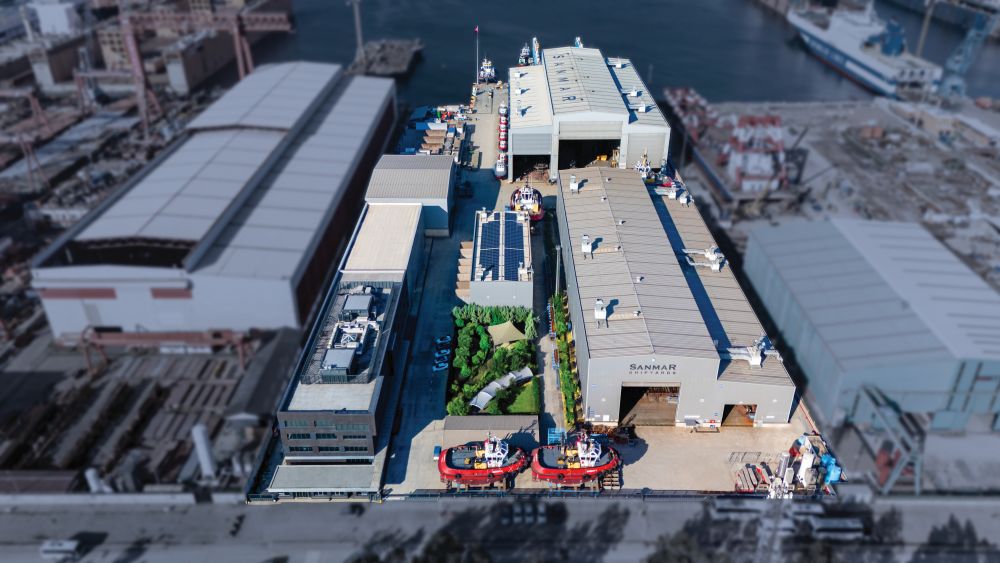
Celebrating 50 years in the tugboat business, Sanmar has evolved from a local towage operator into one of the world’s leading specialist tugboat builders, with more than 350 tugboats delivered to operators across six continents.
In this interview, Rüçhan Çıvgın, Commercial Director at Sanmar, discusses the growing opportunities in the Middle East, the role of digitalization and AI in shipbuilding, and its strategy for maintaining global growth and competitiveness. As Sanmar looks beyond its 50th anniversary, its ambition is clear: to help operators achieve safer, more efficient, and more sustainable towage operations worldwide.
As Sanmar celebrates 50 years in the tugboat business, how has the company evolved over the decades to meet the changing demands of the global maritime industry?
Over the past five decades, Sanmar has evolved from a local towage operator into one of the world's leading specialist tugboat builders. While our scale and international presence have grown significantly, one thing has remained constant: our commitment to quality, safety, innovation and long-term partnerships.
Today, we have built more than 350 tugboats for the operators across six continents and have become one of the world's largest builders of Robert Allan Ltd. designed tugboats. Throughout this journey, we have continually adapted to the changing needs of the maritime industry by investing in advanced shipbuilding capabilities, sustainable propulsion technologies and customer focused engineering.
Innovation has always been a defining part of our identity. From pure LNG fuelled tugs, dual-fuel LNG fuelled tugboats and fully electric tugs to the world's first purpose-built dual-fuel methanol escort tugboats, we have consistently invested in technologies that help shape the future of towage industry.
As we celebrate our 50th anniversary, we believe our greatest achievement has been our ability to anticipate change rather than simply react to it. That mindset will continue to guide Sanmar as ports and operators around the world including those across the Middle East accelerate their transition towards smarter, safer and more sustainable towage operations.
Sanmar has signed contracts with HaiSea Marine for the build and delivery of five technologically advanced tugs to serve LNG Canada. How are partnerships like these shaping your approach to decarbonization and the future of electric tugs?
Long-term partnerships such as HaiSea Marine are invaluable because they allow us to innovate together rather than simply build vessels.
Working alongside forward-thinking operators enables us to validate new technologies under demanding operational conditions and gather real-world experience that benefits future projects.
Today, Sanmar has built 15 fully electric tugboats operating across Europe and the Americas, including the first fully electric tugboats for Canada, Norway, Denmark and Chile. These projects have demonstrated that battery-electric propulsion is no longer an experimental concept it is a proven commercial solution for many harbour towage operations.
At the same time, decarbonisation is not about a single technology. Different ports have different operational profiles, infrastructure and environmental objectives. That is why we continue investing in battery-electric propulsion alongside LNG and methanol as alternative fuel solutions.
The operational knowledge gained through projects such as HaiSea Marine provides valuable experience that can benefit ports worldwide. As more ports begin evaluating lower-emission towage solutions, we believe these lessons will become increasingly relevant for the Middle East as well.
The Middle East continues to invest heavily in ports, logistics, and maritime infrastructure. How do you assess the region's potential, and what opportunities does it present for Sanmar's tugboat solutions and shipbuilding expertise?
The Middle East is no longer simply an important regional market it is becoming one of the world's leading centres of maritime investment.
Major investments in ports, logistics corridors, LNG infrastructure, offshore energy and industrial developments are creating growing demand for high-performance, reliable and environmentally responsible tugboats.
We believe the region is also well positioned to become an early adopter of next-generation propulsion technologies as sustainability becomes an integral part of national development strategies across several countries.
For Sanmar, the Middle East has always been an important market, and we see significant opportunities to contribute not only through vessel construction but also through our engineering expertise, after-sales support and long-term partnership approach.
Whether customers require compact harbour tugboats, high-performance escort tugs or fully electric tugs, LNG fuelled tugs, or IMO Tier III compliant vessels, we believe Sanmar is well positioned to support the region's continued maritime growth.
The global shipbuilding industry continues to face challenges such as supply chain disruptions, evolving environmental regulations, and changing customer requirements. What have been the biggest challenges for Sanmar in recent years, and how has the company adapted to remain competitive?
The challenges facing shipbuilders have become increasingly complex over the past few years.
Supply chain disruptions, geopolitical uncertainty, inflation, evolving environmental regulations and rapidly changing customer expectations have all required shipbuilders to become more agile than ever before.
As a shipbuilder operating in Türkiye, we have also managed periods of currency volatility while maintaining our commitment to quality, delivery performance and customer satisfaction.
Rather than slowing investment during uncertain periods, we continued strengthening our supplier network, investing in research and development, expanding digital capabilities and improving production planning.
Ultimately, remaining competitive today is not only about building quality vessels it is about responding quickly, maintaining flexibility and continuing to innovate ahead of changing market expectations.
Digitalization is transforming the shipbuilding industry. How is Sanmar leveraging technologies such as automation, artificial intelligence, and smart design tools to enhance efficiency, innovation, and vessel performance?
Digitalisation is becoming an essential part of both shipbuilding and vessel operations.
At Sanmar, we see artificial intelligence and digital technologies not as replacements for engineering expertise, but as tools that enable our engineers to make faster, better informed decisions.
Within our shipyards, we continue investing in digital production management, smart ERP systems and AI-supported engineering processes that improve efficiency, production scheduling, quality control and supply chain management.
On board our vessels, technologies such as predictive maintenance, remote diagnostics, performance monitoring and energy optimisation help operators maximise availability while reducing operating costs and emissions.
As tugboats become increasingly sophisticated, digital technologies will play an even greater role in improving both operational performance and lifecycle efficiency.
Are there any new markets or regions that Sanmar is particularly focused on for future growth?
Rather than expanding simply for the sake of entering new markets, our strategy is to grow in regions where operators are investing in modern, sustainable and high-performance fleets.
North America remains an important market, particularly as demand for low-emission harbour towage continues to grow.
At the same time, we see significant long-term opportunities across the Middle East, where major investments in ports, energy infrastructure and logistics continue to drive demand for advanced tugboat solutions.
We also continue to strengthen our presence in Europe and selected Asia-Pacific markets, always focusing on customers who value engineering excellence, innovation and long-term partnerships.
Looking back, how would you evaluate Sanmar's performance over the past year, and what are your key priorities, growth plans, and expectations for the year ahead?
The first eight months of 2026 have been among the most significant periods in Sanmar's history.
Celebrating our 50th anniversary while signing new contracts with leading international operators such as Boluda Towage, SAAM Towage, HaiSea Marine and Fairplay Towage Group reflects both the confidence our customers place in us and the strength of our long-term strategy.
During this period, we have continued to strengthen our leadership in sustainable tugboat technologies through new electric and alternative-fuel projects. We also commenced steel cutting of the 100th sister Bogaçay class tugboat, a RAmparts 2400SX-MKII design, marking another important milestone for Sanmar.
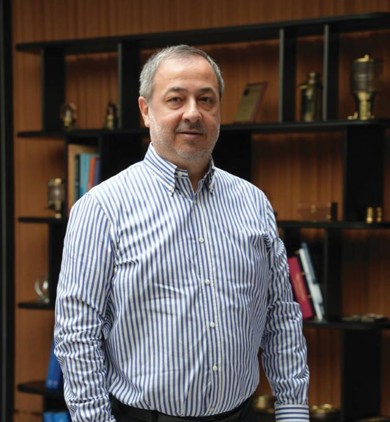
Rüçhan Çıvgın, Commercial Director at Sanmar
Beyond the commercial achievements, the first eight months of this year have reaffirmed the value of long-term partnerships. Continuing to receive repeat orders from long-standing customers while welcoming new operators to the Sanmar family is perhaps the strongest validation of the trust and reputation we have built over the past five decades.
Looking ahead, our priorities remain clear: continuing to invest in innovation, strengthening our global partnerships, advancing sustainable propulsion technologies and maintaining the engineering quality and customer focus that have defined Sanmar for the past 50 years.
For us, our 50th anniversary is not a finish line it is the foundation for everything we want to achieve over the next 50 years. Our ambition is not simply to build more tugboats, but to help our customers operate more safely, more efficiently and more sustainably wherever they are in the world.
Robban Assafina is now on WhatsApp channel. Click Here
|
To read the full content, click on the following link: Robban Assafina, Issue 103, July/Sep 2026, Maritime Host, pg. 74 |