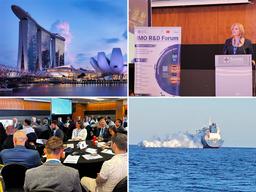
The IMO has adopted a Singapore-led resolution reaffirming the importance of safeguarding vital shipping routes and preserving navigational rights for commercial vessels amid growing geopolitical risks affecting global maritime trade.
Adopted during the 137th session of the IMO Council, held from 6 to 10 July 2026, the resolution was co-sponsored by 30 Member States, including Indonesia and Malaysia. Protection of vital shipping lanes was among the key issues on the Council’s agenda.
The resolution reaffirms the importance of respecting navigational rights and freedoms for commercial vessels transiting vital shipping lanes, including straits used for international navigation, in accordance with international law as reflected in the United Nations Convention on the Law of the Sea (UNCLOS). It also reiterates the importance of complying with regulations and standards adopted by the IMO.
According to the Maritime and Port Authority of Singapore (MPA), the resolution highlights the IMO’s role in promoting a stable, predictable and rules-based maritime order and stresses the importance of international cooperation, dialogue and collective responsibility in keeping critical sea lanes open, secure and accessible.
Seafarer safety at the centre
Importantly, the resolution also highlights the need to safeguard the safety, health and well-being of seafarers, recognising their indispensable role in sustaining global supply chains.
The inclusion of seafarer welfare comes at a particularly critical time for the maritime workforce, as crews continue to operate through increasingly volatile geopolitical environments, sometimes facing missile and drone attacks, restricted navigation and rapidly changing security conditions.
Singapore said the resolution reflects its longstanding commitment to international law and to maintaining an open, stable and predictable maritime environment. As an open and trade-dependent economy, the country stressed that a stable, rules-based international order is essential for uninterrupted global trade, resilient supply chains and food and energy security.
Resolution comes amid renewed threats to Hormuz shipping
The adoption of the resolution comes as security concerns have intensified around some of the world’s most strategically important waterways, particularly the Strait of Hormuz.
During the weekend of 11–12 July, hostilities between the United States and Iran intensified after a commercial container ship was attacked while transiting the Strait of Hormuz. The vessel reportedly caught fire and suffered significant engine-room damage, while one crew member remained missing.
The United States subsequently struck Iranian military targets, while Iran launched retaliatory attacks and again asserted that it controlled or had closed the Strait. US authorities disputed the claim, maintaining that the waterway remained open to commercial shipping.
Against this backdrop, maritime traffic through the Strait fell to a five-week low on Sunday, 12 July, with only six vessels making the transit, according to ship-tracking data from Kpler cited by Reuters.
Most tankers switched off their transponders while crossing the high-risk area, while no LNG tankers visible through ship-tracking data entered the Strait over the weekend.
The renewed escalation highlights the vulnerability of international shipping to geopolitical conflict and the potential consequences of disruption at major maritime chokepoints for global trade, energy security and seafarer safety.
Robban Assafina is now on WhatsApp channel. Click Here