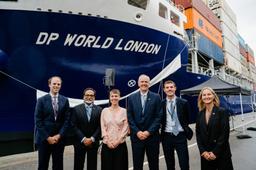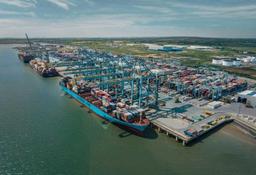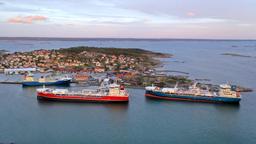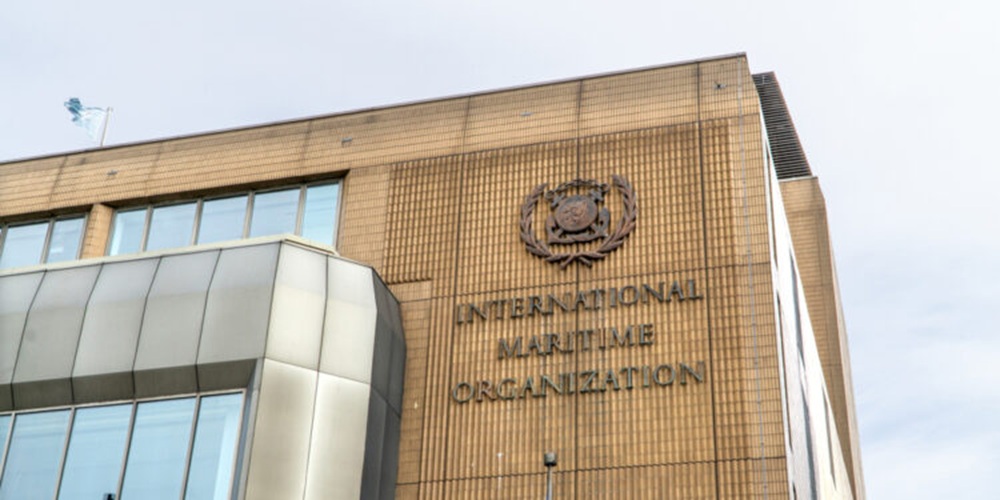
The IMO’s Intersessional Working Group on Reduction of GHG Emissions from Ships (ISWG-GHG 22) will meet in London from 1–4 September 2026, with discussions expected to focus on outstanding elements of the draft IMO Net-Zero Framework and the path towards greater convergence ahead of further negotiations later this year.
At the centre of the discussions will be the future shape of the IMO’s mid-term GHG reduction measures. The draft Net-Zero Framework, approved at MEPC 83 in April 2025 but not yet formally adopted, combines a global fuel standard with a GHG emissions pricing mechanism designed to encourage the uptake of lower-emission energy sources and support shipping’s transition.
However, continuing concerns among Member States have resulted in several proposals seeking changes to how the framework would operate in practice.
One key area of debate is the economic component and the proposed IMO Net-Zero Fund. Pacific island states, including Fiji, Kiribati, Nauru, Palau, Tuvalu and Vanuatu, have called for a robust economic mechanism and an integrated fund, while urging the IMO to focus on reaching agreement and progressing implementation guidelines.
Other proposals place greater emphasis on flexibility, fuel availability, affordability and energy efficiency. Panama and Liberia have supported an approach that better reflects market readiness and the availability and cost of zero- and near-zero-emission fuels, while Liberia has also proposed greater reliance on surplus-unit trading.
Japan has similarly highlighted energy efficiency, fleet development and fuel availability when determining a workable emissions pathway.
For industry, the debate goes beyond the design of the regulatory mechanism. Shipowners, fuel producers and infrastructure providers are already making long-term decisions on vessels, fuels and supply chains.
Greater regulatory clarity could therefore influence when and where capital is committed, while the eventual framework will also need to create conditions that support the commercial scale-up of zero- and near-zero-emission fuels.
Industry calls for regulatory certainty
Ports, shipowners, fuel producers and other maritime industry stakeholders are calling on the International Maritime Organization (IMO) to deliver an ambitious and binding global framework for shipping’s decarbonisation, warning that regulatory certainty will be critical to unlocking investment in cleaner fuels, vessels and infrastructure.
The calls come from members of the Getting to Zero Coalition, including the Port of Bremen, Port of Rotterdam, Pacific Basin, Höegh Autoliners, CMB.TECH, ETFuels, Port of Kiel and Yara International, representing key parts of the maritime value chain.
In particular, Martin Fruergaard, CEO of Pacific Basin, said effective global regulation was necessary to support an efficient transition.
“Pacific Basin believes the efficient decarbonisation of international shipping requires effective global regulation,” Fruergaard said. “We support the timely adoption of an ambitious IMO framework that provides regulatory certainty and effective economic incentives to accelerate the uptake of low- and zero-emission fuels and vessels, reduce the risk of regional fragmentation, and keep shipping on a credible pathway towards the IMO’s goal of net zero emissions by around 2050,” he commented.
At Höegh Autoliners, CEO Andreas Enger pointed to the scale of investment already being made in alternative-fuel vessels. Enger stated: “Shipping is inherently global, making global regulation vital. We are less than one year away from taking delivery of our, and the segments, first ammonia dual-fuel vessel. The first investments are taken and the trend is clear – vessels are built for the decades ahead.”
Enger said more than $180 billion had already been invested in dual-fuel vessels by liner shipping, citing UCL estimates that 7,000 new vessels would be needed between 2028 and 2031.
“Laying the regulatory foundation now is critical to ensuring that these investments take shipping into the right direction,” he said, adding that Höegh Autoliners strongly supports ambitious IMO measures aligned with the 2023 IMO GHG Strategy.
Furthermore, Alexander Saverys, CEO of CMB.TECH, argued that the maritime sector already has the technology and expertise needed to accelerate decarbonisation.
“The Net Zero Framework will create a decisive boost to the decarbonisation of the shipping industry. The maritime sector already has the technology, the expertise and the ambition to take action on a large scale,” Saverys said.
He pointed to the company’s first ammonia-powered vessel, due for delivery this year, as evidence of the transition taking place.
“For the first time in over 200 years, ships can sail without emitting CO₂. This is no longer a long-term ambition, it is a technological reality,” Saverys said.
Fuel and infrastructure investment at stake
For fuel producers, the framework is also seen as a potential catalyst for scaling up new fuels.
Felix Leworthy, COO of ETFuels, said the key question was no longer whether e-methanol could contribute to shipping’s decarbonisation, but whether the market conditions would allow production to scale.
“A strong IMO Net-Zero Framework, with meaningful rewards targeted at scalable zero-emission fuels, can turn billions of dollars of planned e-fuel investment into projects under construction,” Leworthy said. “Delay or dilution risks doing the opposite.”
Ports are also seeking greater certainty over the investments required to support the transition.
Kristina Vogt, Bremen’s Minister for Economic Affairs, Ports and Transformation, said investment in clean propulsion and green fuels would be critical to securing the port’s long-term economic future, including value creation and jobs.
“Climate protection in shipping is how we secure the future of a port location like Bremen. Investing now in clean propulsion and green fuels safeguards value creation and jobs for decades to come. That is why we support the call for an ambitious and binding Net Zero Framework. Bremen is actively helping to shape this transformation,” Vogt said.
Boudewijn Siemons, CEO of the Port of Rotterdam, similarly stressed the need for a global approach to shipping emissions. He said international regulation was essential to achieving the goals of the IMO’s 2023 GHG Strategy and maintaining a level playing field across the industry.
“The Port of Rotterdam strongly encourages continued discussions about a global framework for greenhouse gas emissions (GHG) in the maritime sector, which will help to achieve the goals set out in the International Maritime Organization’s (IMO) 2023 GHG Strategy,” Siemons said.
“Given the inherently international nature of shipping, it is crucial to establish a level playing field worldwide,” he added, urging IMO delegations to continue working towards a broad consensus on the framework.
Dirk Claus, CEO of Port of Kiel, said the port had already invested in shore power, digital infrastructure and smart port operations in preparation for a climate-neutral shipping sector.
“We now call on the IMO to deliver an ambitious global framework at MEPC 85 that provides long-term investment certainty and avoids further delays,” Claus said.
He added that decisions taken this year should accelerate the commercialisation of zero-emission fuels, vessels and infrastructure by 2030 while keeping the maritime sector on track for full decarbonisation by 2050.
Yara International EVP People, External Affairs and Chief of Staff, Hanna Maria Døhlen Opsahl-Ben Ammar, likewise highlighted regulatory certainty as a key condition for investment.
“Clear, predictable, and globally harmonized rules provide the confidence needed to mobilize capital, develop infrastructure, foster innovation, and scale low-emission solutions across the maritime value chain,” she said.
Yara also pointed to progress on implementation guidelines ahead of ISWG-GHG 22, while stressing that further decisions would be needed to ensure the eventual framework could be implemented effectively and consistently.
Greater regulatory clarity could therefore influence when and where capital is committed, while the eventual framework will need to create conditions that support the commercial scale-up of zero- and near-zero-emission fuels.
Alongside discussions on possible amendments to the framework, work will continue on implementation guidelines and the IMO Life Cycle GHG Assessment (LCA) framework, which will be critical to how the eventual measures operate in practice.
ISWG-GHG 22 will not mark the end of the process. A further intersessional meeting is scheduled for 23–27 November, followed by MEPC 85 from 30 November–3 December.
The IMO also plans to resume its adjourned extraordinary MEPC session on 4 December, subject to confirmation by MEPC 85, when formal adoption of the framework could again be considered.
The September discussions will therefore provide an important indication of whether Member States are moving towards broader convergence and greater regulatory certainty for shipping’s decarbonisation pathway.
Robban Assafina is now on WhatsApp channel. Click Here