HD Hyundai is testing a new wind assisted propulsion system designed to cut fuel consumption and emissions. The technology reflects growing efforts by shipbuilders and shipowners to combine traditional wind power with modern vessel design.
Wind power is returning to commercial shipping, though in a form far removed from the sails that once carried early vessels across the oceans.
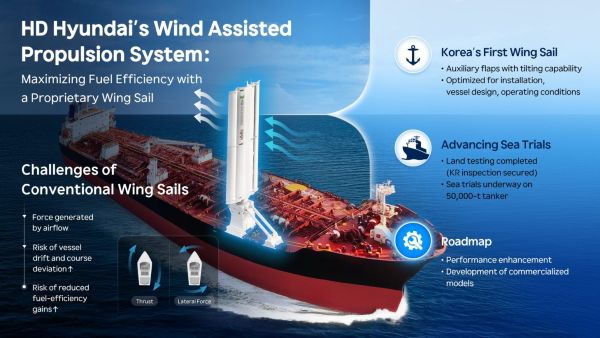
HD Hyundai is advancing a wind assisted propulsion system built around a wing sail design intended to reduce fuel consumption and support the maritime sector’s push toward lower carbon operations. The system uses aerodynamic principles similar to those found in aircraft wings to generate lift and contribute to forward propulsion.
As wind flows across the wing shaped structure, lift is created. In aviation this force raises an aircraft. On a ship it pushes the vessel forward. By providing additional thrust, the wing sail reduces the load required from the main engine to maintain speed, which lowers fuel consumption.
The concept forms part of a wider effort across the maritime sector to combine alternative energy sources with existing propulsion systems. Wind assisted propulsion is being explored by shipowners as a practical way to reduce maritime emissions while operating conventional engines.
HD Hyundai has built its wing sails using in house manufacturing capability developed over more than five decades in shipbuilding. The design also reflects the complexity of applying aerodynamic technology to large commercial vessels.
A wing sail produces both forward thrust and lateral force. While the thrust contributes to propulsion, the sideways force can cause a vessel to drift. The ship’s hull and rudder must compensate for this movement, which can create additional resistance in the water.
To address this, the company has focused on integrating the sail with overall vessel design, including hull form, rudder configuration and operating conditions.
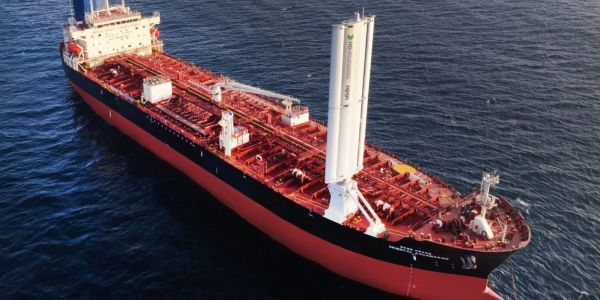
The first full scale wing sail prototype stands about 30 metres tall and 10 metres wide. Auxiliary flaps installed on both sides of the main wing improve wind utilisation. A tilting mechanism allows the sail to fold during severe weather or when passing beneath bridges.
The prototype was installed on a 50,000 deadweight tonne tanker operated by HMM. Sea trials began earlier this year after structural safety checks and baseline performance assessments. The vessel also completed inspections conducted by the Korean Register.
HD Hyundai is now analysing operational data gathered during the trials to assess fuel savings and potential carbon emissions reductions as it works toward commercial deployment of the system.
Alongside the wing sail, the company is also testing Hi ARS, an air resistance reduction system installed at the bow. The structure guides airflow along the hull to reduce wind drag and improve fuel efficiency without requiring additional power.
Robban Assafina is now on WhatsApp channel. Click Here