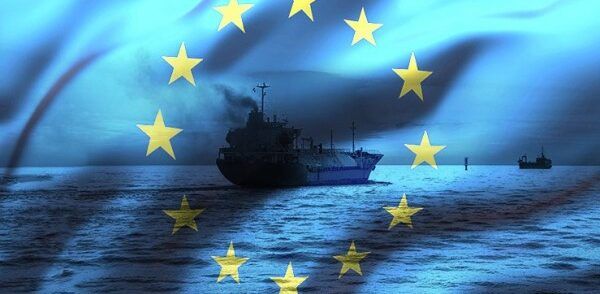
Europe’s shipping sector is facing a new phase of regulatory change as EU lawmakers advance reforms to the Emissions Trading System (EU ETS) while pursuing measures to streamline reporting requirements under the bloc’s maritime climate framework.
Meanwhile, the European Parliament is considering tougher measures to prevent companies from avoiding carbon costs, while new initiatives on cybersecurity, shipbuilding, industrial competitiveness and funding are beginning to take shape. The developments, highlighted in the Bureau Veritas Marine & Offshore’s September 2026 European Affairs Report, point to a broader shift in EU policy – that shipping is increasingly being treated not only as a sector that must decarbonise.
ETS reform moves into the next stage
The EU’s ETS reform is currently one of the most significant issues for shipping. Following the European Commission’s proposal in July, the European Parliament is now working towards its negotiating position.
The lead European Parliament Rapporteur, Peter Liese, has proposed several changes, including directing a larger share of ETS revenues towards industrial decarbonisation.
Under the proposal, the share of ETS revenues allocated to industrial decarbonisation would rise to 75%, compared with 50% in the Commission’s proposal. The draft also proposes changes to the pace at which emissions allowances are reduced between 2030 and 2040.
For shipping, another important element is the proposed strengthening of anti-evasion measures.
The draft supports reducing the transhipment threshold from 65% to 50% and extending the relevant port-distance criterion to 150 nautical miles. It would also extend ETS coverage to certain smaller vessels between 400 and 5,000 GT and some offshore activities.
However, these remain proposals rather than final rules, with further parliamentary negotiations expected before the EU’s position is settled.
Simplifying maritime reporting
While the EU is considering additional regulatory requirements, it is also attempting to remove some of the administrative duplication facing shipping companies.
A major proposal would bring the EU MRV and FuelEU Maritime reporting frameworks closer together, potentially allowing companies to align or merge reporting and verification cycles.
The reason is straightforward. Both systems rely heavily on similar emissions and operational data, yet companies currently have to maintain separate monitoring and reporting processes.
The European Parliament’s draft position supports aligning MRV, EU ETS and FuelEU Maritime reporting and verification cycles to reduce duplication. Member State ministers are also due to discuss the issue in October.
For shipowners and operators, this could ultimately mean a more streamlined compliance process — although the final shape of the reform remains under negotiation.
CBAM could affect more cargo flows
The EU is also moving to expand the reach of its Carbon Border Adjustment Mechanism. The European Parliament has backed extending CBAM beyond basic materials such as steel and aluminium to a wider range of downstream products, including items such as wire, springs and fasteners.
The measure is designed to prevent carbon-intensive production from shifting outside Europe to avoid EU climate costs. Parliament’s position will now form part of negotiations with Member States.
For shipping, the significance is broader than direct compliance. Changes to CBAM could influence where cargo is produced, traded and processed, potentially affecting European trade flows and maritime demand.
Cybersecurity is becoming a bigger regulatory issue
The EU’s regulatory agenda is also moving beyond emissions. Under the proposed Cybersecurity Act 2, the European Parliament’s industry committee has backed a tougher approach that would make cybersecurity certification mandatory by default for certain critical entities covered by NIS2.
The proposal would also introduce stronger enforcement measures and give greater importance to cybersecurity certification when demonstrating compliance with other EU requirements.
For maritime companies, the development is worth watching as vessels, ports and logistics networks become increasingly dependent on connected digital systems.
The rules are still moving through the legislative process, but the direction of travel is clear: cyber resilience is becoming an increasingly important part of Europe’s wider regulatory framework.
Europe looks to protect its maritime industrial base
Perhaps the most strategically important development beyond environmental regulation is the EU’s push to strengthen its maritime industrial sector. The European Industrial Maritime Strategy, adopted in March, aims to strengthen competitiveness, sustainability, security and resilience across shipping, ports and shipbuilding.
The September report highlights the proposed Industrial Accelerator Act, which could bring maritime equipment and ships into a European-preference framework.
The Parliament’s draft report proposes measures supporting European content and strategic equipment, potentially giving European shipbuilding and maritime suppliers greater support in public procurement and other schemes.
That could become particularly significant as European shipyards face intense competition from Asian builders and governments seek to strengthen strategic industrial capacity.
Meanwhile, the newly established EU Industrial Maritime Value Chains Alliance is intended to bring together maritime companies and other stakeholders to identify investment opportunities and develop projects involving sustainable vessels and net-zero technologies.
The next phase will be about implementation
The September developments show that Europe’s maritime agenda is becoming broader. The EU is continuing to push shipping towards lower emissions through measures such as ETS and FuelEU, while simultaneously trying to reduce unnecessary reporting burdens.
For shipowners and operators, the immediate focus will be on the next stages of the ETS and MRV/FuelEU discussions. But the longer-term question is how these environmental rules interact with Europe’s emerging industrial strategy.
The direction of EU policy increasingly suggests that compliance and competitiveness will have to move together — with shipping expected to decarbonise while Europe also seeks to strengthen its own maritime industrial base.
The coming months should provide a clearer picture, with parliamentary discussions on ETS and FuelEU/MRV reforms continuing, while further work advances on industrial policy, cybersecurity and the EU’s wider maritime strategy.
Source: Safety4sea
Robban Assafina is now on WhatsApp channel. Click Here