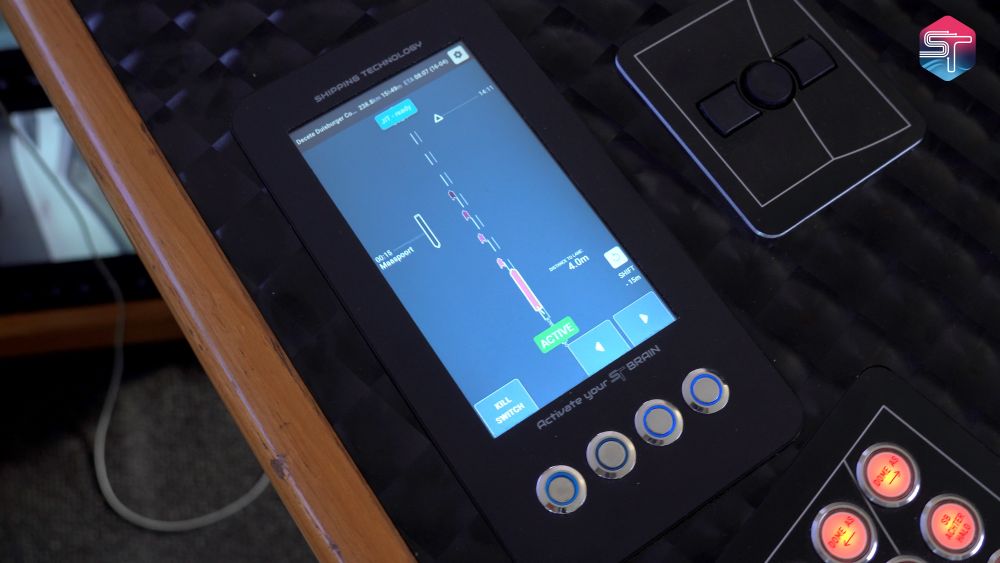
Shipping Technology has launched ST Sailing Pro, an extension of its ST Sailing track pilot that now not only controls a vessel's steering, but also its propulsion. This is the next, planned step in the company’s roadmap towards autonomous sailing. In short: the captain enters a destination and a desired arrival time, after which the system continuously calculates the course and engine power needed to meet it – taking changes in locks, currents, water levels etc. into account. On a normal sailing pattern, ST Sailing Pro reduces fuel consumption by a further 10 per cent on top of the 5 per cent already validated for ST Sailing. The system operates at level 2 of the CCR automation scale, with the captain supervising at all times.
Shipping Technology started collecting vessel data in 2018, with the ST Brain PRO onboard unit and added automatic rudder control five years ago, and now running on 400+ vessels. ST Sailing runs on some 200 vessels and has logged more than 315,000 sailing hours and 4.4 million kilometres. That data set has significantly speeded up developing the next step: active propulsion control.
6 months of testing and continuing
Trials last year used a thruster-driven river cruise vessel and covered automated manoeuvring. Testing then moved to conventionally equipped commercial vessels - main engines, reverse-reduction gearboxes, a propeller shaft and a rudder - which make up the largest part of the inland fleet. After six months on a single vessel under a Smart Shipping permit, trials now run across several vessels in the dry cargo, tanker and passenger shipping markets.
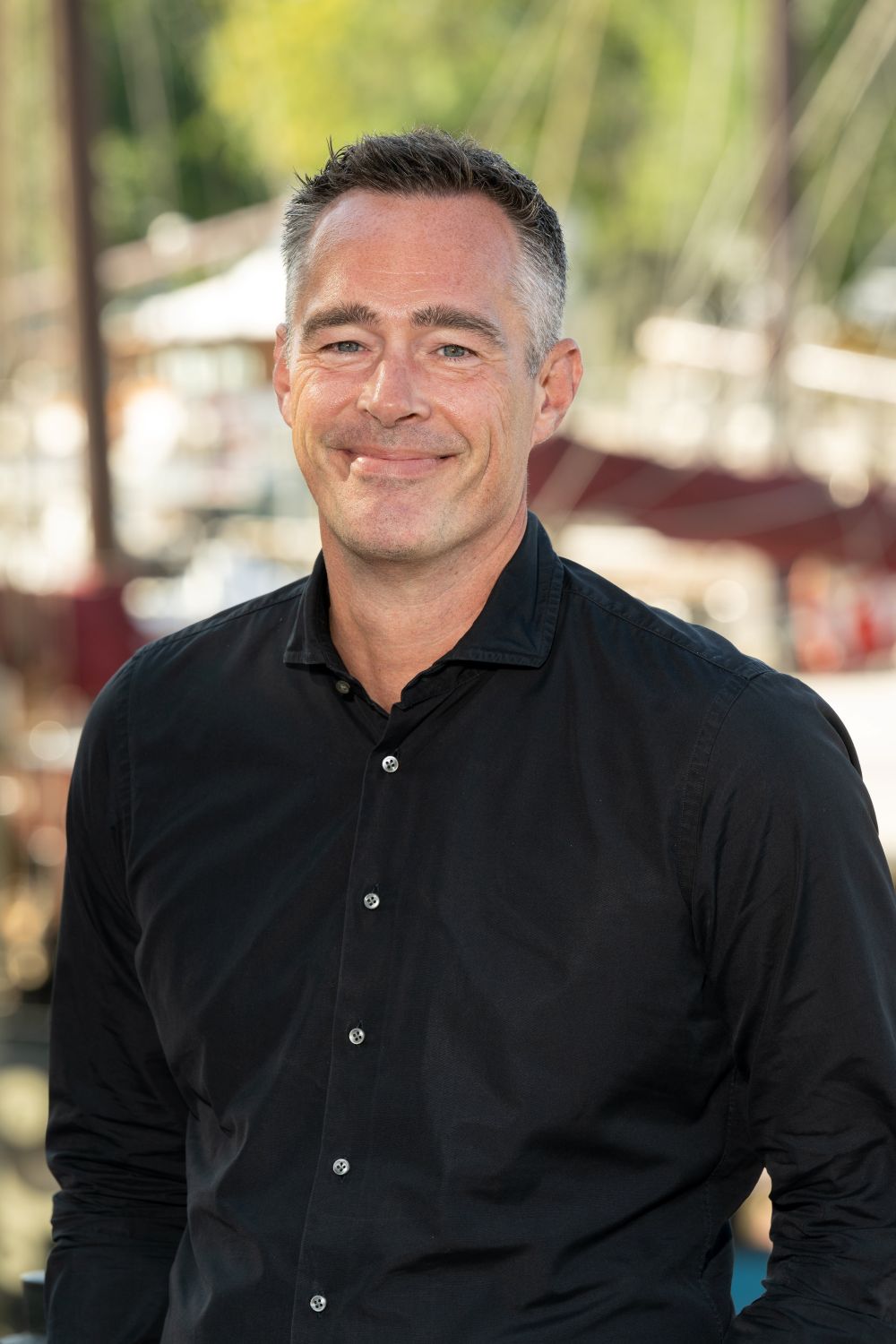
Remco Pikaart, Founding Partner, Shipping Technology
How it works
Remco Pikaart, Founding Partner, Shipping Technology, explains: “The captain casts off and manoeuvres out manually. Note that we have already automated this for thruster-propelled vessels Then, he or she engages ST Sailing Pro and enters a destination and arrival time. The system indicates whether that time is achievable and then adjusts course and engine power to meet it, sailing - and this is unique - in the way a skipper would. We’ve built that into the system. Water levels, squat and lock scheduling are part of the calculation, and the feasible arrival window can vary by up to three hours depending on conditions. The captain validates what the system proposes, e.g. whether to overtake, hold back, or arrive earlier or later. Also, the captain can take over at any moment. At CCR level 2 (ed.: Central Commission for the Navigation of the Rhine), responsibility for all other sailing tasks remains with the captain, and the onboard technical infrastructure meets regulatory requirements taking effect on 1 January 2028. I’m very proud of my team!”
Validated fuel savings
Rijkswaterstaat (part of the Dutch ministry of Infrastructure and Water Management) validated the 5% fuel saving for ST Sailing in certified field testing. Interestingly, the additional 10% from propulsion control is largely determined early in a voyage, in the speed chosen shortly after departure.
Remco: "Besides creating added value on ship data for shipowners and fleetmanagers via the ST Brain Pro, we spent eight years building the data foundation for the autonomous sailing roadmap, five of them with ST Sailing steering vessels, and every hour it sails tells us more about how a ship behaves. That is why this step went faster than the ones before it. For existing customers, implementation is a small step; and we already see that for new clients this development is the moment they decide to automate. What matters just as much is that the captain stays in the loop: the system proposes, the captain decides, and control returns to the wheelhouse the moment anything changes."
Bosman Shipping Group
Bosman Shipping Group is one of the companies that has decided to actively participate in testing of the new automatic propulsion control system. Robert-Jan Brummelkamp, COO, says: "The system accounted for the tide by itself and brought us in exactly on schedule, at the fuel consumption we were aiming for. Our captains keep the final say, which is the only way this works on a commercial vessel."
Robban Assafina is now on WhatsApp channel. Click Here