US-based start-up Quartermaster reports that it has secured US$43 million in a Series A funding round to expand its maritime awareness network, with a funding round co-led by First Round Capital and Quiet Capital, with participation from TMV, Steel Atlas, BoxGroup, Operator Partners, Shorewind Capital, and David Adelman.
The company says that the capital will be used to address data gaps across global oceans, supplementing traditional data collection approaches, including satellites, bespoke sensors, and national systems.
The system aims to utilise the existing commercial and working fleet, including fishing boats, workboats, ferries, cargo vessels, and offshore service vessels, as a distributed infrastructure network. Vessels equipped with its SmartMast tech, a sensor kit containing cameras, radios, and satellite connectivity, will each become an intelligent node within its global sensing network.
“The ocean has not had its AI moment because it has not had its data moment. Quartermaster is building the largest maritime awareness network in the world to change that,” said Neil Sobin, Chief Executive Officer at Quartermaster.
“I’ve spent my career on the two halves of this exact problem. At Hivemapper, I helped build a decentralised network of everyday cars that mapped the world block by block, proof that a distributed fleet of people already on the move can out-cover any centralized system. At Scale AI, I saw the other half: how much leverage AI systems have, and how completely that leverage depends on the data underneath.”
“The ocean is where those two lessons collide. It’s the largest and most poorly instrumented environment on the planet, and the fleet that could map it is already out there.”
To date, the company says that its network has covered more than 25.9 million square kilometres of ocean, with 7.25 million square kilometres processed in April 2026 alone. The active network includes approximately 600 vessels deployed across 25 countries and four continents, which have collectively travelled more than 16 million kilometres
Along with identifying more than 400,000 vessels operating without Automatic Identification System (AIS) capabilities, the network has assisted in more than 20 maritime rescues.
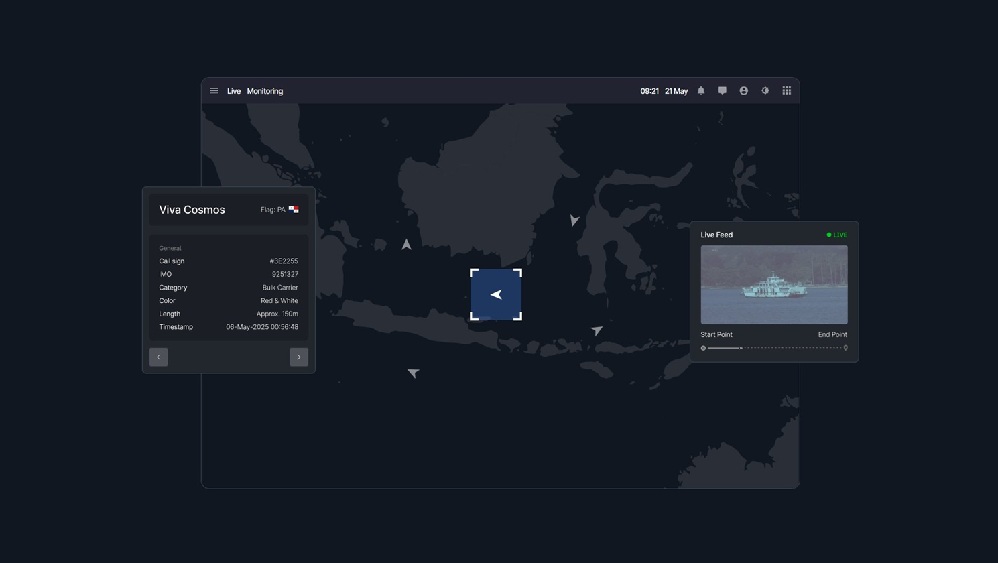
For the vessels themselves, the platform provides high-definition video feeds, location data, and artificial intelligence-driven alerts to identify nearby vessels and flag unusual activity through a real-time satellite link. Data records are timestamped and authenticated to preserve verifiable intelligence for maritime operations.
Source: Smart Maritime Network
Robban Assafina is now on WhatsApp channel. Click Here