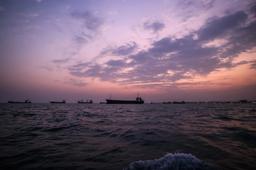
The Philippine government has repatriated 837 Filipino seafarers affected by maritime attacks and security incidents in the Northern Black Sea and Strait of Hormuz, Migrant Workers Secretary Hans Leo J. Cacdac said.
Speaking at the launch of the OFW Transit Lounge at Ninoy Aquino International Airport Terminal 3 on November 11, Cacdac said about 1,189 Filipino seafarers aboard vessels in the two areas have been affected by incidents since the start of the year.
Of the number, 837 seafarers have returned to the Philippines while the DMW continues to monitor the situation and assist those who remain abroad.
Three recent attacks in the Strait of Hormuz and Persian Gulf did not injure Filipino seafarers.
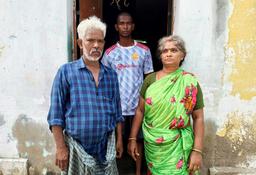
However, a separate attack on a tanker in the Persian Gulf on November 5 resulted in the death of one Filipino seafarer.
The vessel, which had 22 Filipino crew members on board, has reached a safe port, and 21 crew members have been declared safe.
The remains of the deceased seafarer have been disembarked and are being prepared for repatriation to the Philippines.
Secretary Cacdac assured the bereaved family of the government’s full assistance, in line with President Ferdinand R. Marcos Jr.’s directive.
He said he would personally visit the family and that the seafarer’s remains are expected to be repatriated soon.
The DMW continues to monitor developments in high-risk maritime areas and coordinate with relevant government agencies, shipowners, and licensed manning agencies to safeguard Filipino seafarers and uphold their safety and welfare.
Philippines signs MOU to strengthen seafarers’ welfare cooperation
The Associated Marine Officers’ and Seamen’s Union of the Philippines (AMOSUP) and the International Transport Workers’ Federation (ITF) jointly signed a memorandum of understanding with the Philippine government’s Department of Migrant Workers (DMW), to establish a framework for coordinated, timely and practical assistance to Filipino seafarers and their families.
The areas of cooperation covered by the agreement include information sharing, coordinated case handling, assistance on cases involving piracy, high-risk areas and abandonment, welfare and family support, and capacity building, such as training, research and consultations on seafarers’ rights, safety, mental health, welfare, relevant international labor standards and emerging maritime concerns.
Stephen Cotton, ITF general secretary, said: “The ITF is at the heart of setting the standards that empower seafarers all around the world – Filipino seafarers are truly at the heart of the maritime industry, and we’re delighted to work with our partners to do more to protect and support them and the vital work they do.
“Together, we can now do more to promote Filipino seafarers in the global maritime industry, bring more into the ITF and ensure that their rights and interests are always front and centre.”
Robban Assafina is now on WhatsApp channel. Click Here