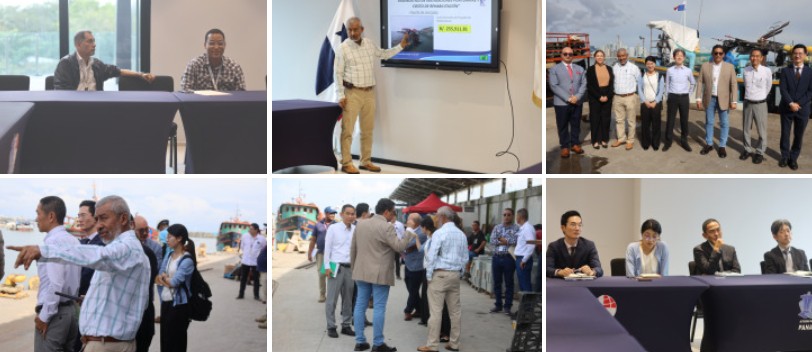
Representatives from the Japan International Cooperation Agency ( JICA ) visited the Panama Maritime Authority ( AMP ) to learn firsthand about the functions performed by the institution and explore new opportunities for bilateral cooperation
Following a working meeting in which projects underway and in the planning phase were presented, the delegation was taken to the Puerto Panamá port terminal to learn about its operation.
Ibis Pérez, Director of Planning at the AMP , explained that these tours aim to strengthen bilateral technical cooperation focused on promoting and developing the Panamanian maritime industry.
“In 2004, JICA prepared a National Port Development Plan for the AMP that included an in-depth study of all the infrastructure, which remains useful and a valuable reference for attracting that cooperation,” Pérez noted.
More than 20 years after its creation, this plan remains an important benchmark for promoting port planning in the country. As a result of implementing this study, progress was made in developing projects such as the Multipurpose Pier in Puerto Armuelles and Puerto Pedregal.
It also influenced the constant growth of port traffic in the country, as well as the institutional and technological modernization of the AMP , such as the implementation of the Panama Maritime Single Window (VUMPA), the digitization of procedures and automation of processes.
Shohei Tada, JICA 's representative in Panama, noted that the visit provided a better understanding of the activities carried out by the Panama Maritime Authority (AMP) , including the movement of cargo at the national and international levels—areas that can be strengthened through technical and financial assistance. "Following this tour, we have identified several needs and will be able to better plan our training courses and other support measures," Tada added.
JICA and Panama have maintained a cooperative relationship since 1963, during which time many Panamanians have received scholarships for training courses in Japan. The agency's mission is to contribute to the socioeconomic development of developing countries and promote international cooperation through the exchange of knowledge and experience.