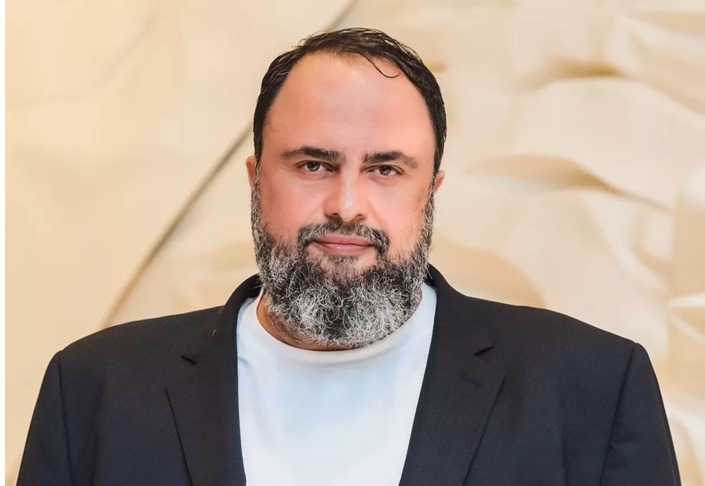
Capital Clean Energy Carriers, owned by Vangelis Marinakis , recorded a historic world first in shipping with the recent launch of the first liquefied carbon dioxide (LCO₂) carrier with a carrying capacity of 22,000 cubic meters, which is being built at the Korean shipyards HD Hyundai Mipo Dockyard, a subsidiary of HD Hyundai Shipbuilding, which was commissioned a few days ago, as the Ulsan shipyards characteristically reported in a relevant announcement.
It is the first of four liquefied carbon dioxide carriers being built by Korean shipyards on behalf of Capital Clean Energy Carriers Corp. The ship is 159.9 meters long, 27.4 meters wide and high, and its construction, which is scheduled for the end of the year, has been overseen by Capital Gas Ship Management Corp. This ship is the largest of its type and is equipped with technologies to reliably transport various liquefied gas cargoes, such as liquefied carbon dioxide, liquefied petroleum gas (LPG) and ammonia (NH₃). It also implements ice-resistant technology (Ice Class 1C) that allows safe operation in cold, icy seas.
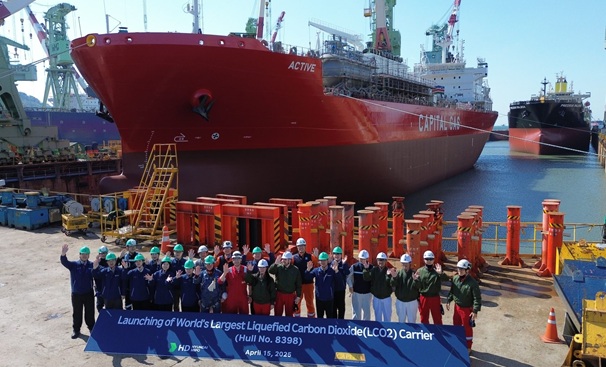
In addition, it can reduce various harmful exhaust gases through the shore power supply device (Alternative Marine Power) and the nitrogen oxide reduction device (Selective Catalytic Reduction), and it cannot be used as a ship with ammonia exhaust, without carbon dioxide emissions after future use.
The initial agreement for the construction of the four ships was signed in July 2023 at Capital's offices in Piraeus in the presence of the president and founder of Capital Maritime & Trading Corp, Vangelis Marinakis, and its signing marked a historic milestone not only for the Capital Group, but also for the claim of Capital Maritime & Trading Corp.
These ships fully respond to the need to develop new technologies and innovative solutions to address the challenge of deregulation. Clarkson studies predict that to achieve carbon neutrality, the world will need to capture and store more than 6 gigatonnes (Gt) of fuel by 2050, and that about 20% of this amount will need to be transported by sea, requiring about 2,500 liquid tons.
The Capital Group believes that maritime CO2 transport is a rapidly growing market, in which it aims to achieve the number one position. These investments are part of the group's broader goal to follow its development in the latest technology and comply with current and future amendments with significantly increased costs.
Source: mononews