ABS has released its Port State Control (PSC) report for the second quarter of 2026, highlighting detention trends, recurring deficiency areas and the vessel types most frequently involved.
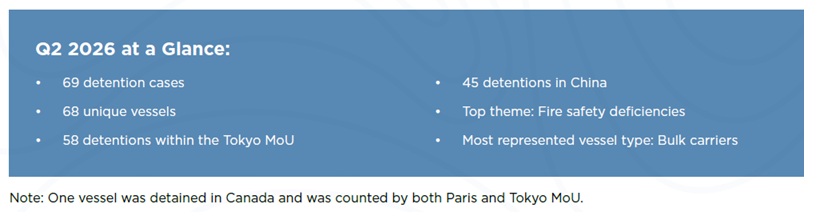
As explained, across the Paris MoU, Tokyo MoU and U.S. Coast Guard regimes covered by the report, 69 detention cases were recorded involving vessels for which ABS acted as the recognised organisation (RO). These cases involved 68 unique vessels.
Detention overview
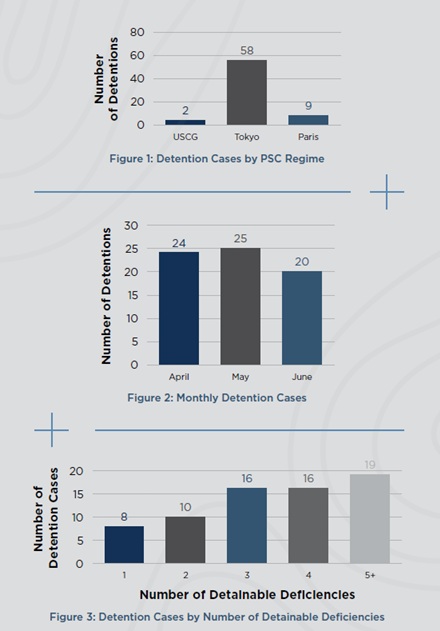
The second quarter was heavily centered on the Tokyo MoU, with relatively steady month-to-month detention levels and a mix of isolated findings on multiple detainable deficiencies. This combination suggests that detention exposure during the quarter was shaped by persistent regional concentration and a blend of isolated deficiencies and broader control weaknesses.
Detention exposure in Q2 was concentrated in a limited number of countries and ports, with China, specifically Shanghai, emerging as the clear center of activity. Detention activity in the second quarter was concentrated in a limited number of jurisdictions rather than broadly distributed across the reviewed PSC regimes.
China accounted for 45 of the 69 detention cases recorded during the quarter, far exceeding any other country in the dataset. At the port level, Shanghai was the most represented location, followed by Zhoushan, Qingdao, Ningbo and Guangzhou.
Outside China, Vancouver and select Australian ports also recorded multiple detention cases, reinforcing the quarter’s strong Asia-Pacific focus.
Takeaway: The country and port distributions show that the second quarter detention exposure was shaped by repeat inspection pressure in a relatively small number of locations.
For owners and operators, the practical implication is clear: vessels trading regularly in these jurisdictions may benefit from heightened pre-arrival readiness, particularly in areas linked to recurring detention themes.
Main deficiency themes driving detentions
Key findings
- Fire Safety: The most persistent detention theme
- ISM and Maintenance Control: Recurring gaps in preventative maintenance and procedural execution
- Machinery and Engineering: Reliability and monitoring weaknesses across critical systems
- Pollution Prevention: Continued exposure linked to MARPOL and ballast water compliance
- Lifesaving and Emergency Systems: Readiness concerns in critical emergency equipment
- Navigation, Documentation and Crew Readiness: Weaker onboard control and operational familiarity
"The Q2 detention profile shows that many cases were shaped by broader control weaknesses rather than isolated defects. Fire safety remained the leading concern, while maintenance-related deficiencies, machinery findings and environmental compliance issues also featured prominently."
For owners and operators, the takeaway is practical: Detention exposure is most often driven by the combined condition of equipment, procedures, records and crew readiness. Addressing individual findings matters, but reducing repeat detention risk depends on strengthening day-to-day controls through the safety management system to support safe and consistent compliance.
Vessel risk profile
The Q2 vessel profile shows that detention cases were concentrated in a limited number of vessels rather than evenly distributed across vessel types.
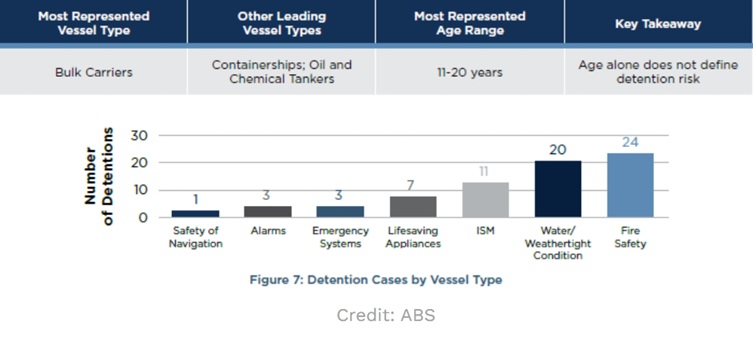
Bulk carriers accounted for the largest share of cases, followed by containerships and oil and chemical tankers, with additional representation from gas carriers and general cargo or multipurpose vessels.
The latest RiSK4SEA PSC Stress Index (PSI) Outlook points to deterioration in bulker performance in August 2026. Although detention activity has normalized, the underlying KPI profile suggests that vessel condition continues to weaken, potentially increasing future detention exposure if corrective action is not taken.
Furthermore, the age profile reinforces a related point: detention exposure was not limited to older vessels. A significant share of cases involved vessels in the 11- to 20-year range, while newer vessels and vessels over 20 years of age also appeared in the detention record.
Across all segments, PSC outcomes continue to be shaped more directly by maintenance effectiveness, equipment readiness and crew familiarity with onboard procedures than by vessel age alone.
"For owners and operators, sustained readiness depends less on vessel category or age alone than on the consistent management of safety-critical systems, maintenance standards and operational discipline throughout the vessel’s operating life."
Recommended actions:
- Prioritize safety-critical systems, with particular attention to fire extinguishing systems, detection and alarm arrangements, fire pumps, remote means of control and fire boundaries.
- Review and strengthen the safety management system’s preventative maintenance discipline, including timely follow-up of known defects before they develop into broader inspection findings.
- Align safety management procedures with onboard training and drills; confirm that onboard routines, maintenance execution and operational controls match documented requirements.
- Prepare early for higher-exposure jurisdictions, especially when recurring detention patterns indicate sustained inspection pressure.
- Prepare for the upcoming CIC by conducting a readiness check; review cargo securing documentation, equipment condition, crew familiarity, supporting records and the Tokyo MoU check sheet in advance.
Upcoming cargo securing CIC
From 1 September to 30 November 2026, the Paris MoU and Tokyo MoU will conduct a joint CIC on cargo securing. In advance of the campaign, vessel readiness may be strengthened by reviewing whether cargo securing arrangements, onboard practices, and supporting records remain aligned with applicable requirements and vessel-specific procedures.
- Cargo Securing Manual: Confirm that the approved manual is available on board and reflects the vessel’s current cargo securing arrangements.
- Securing Equipment Condition: Verify that lashing and securing equipment is in suitable condition for service and that damaged or unserviceable items are addressed promptly.
- Onboard Practice: Review whether cargo securing arrangements and procedures in use on board remain consistent with approved documentation.
- Crew Familiarity: Confirm that personnel involved in cargo operations are familiar with vessel-specific cargo securing procedures and equipment.
- Records and Documentation: Check that relevant inspection, maintenance, and training records are complete and available for review.
Together, these checks can help reduce avoidable deficiencies and support more consistent inspection outcomes during the CIC period.
Robban Assafina is now on WhatsApp channel. Click Here