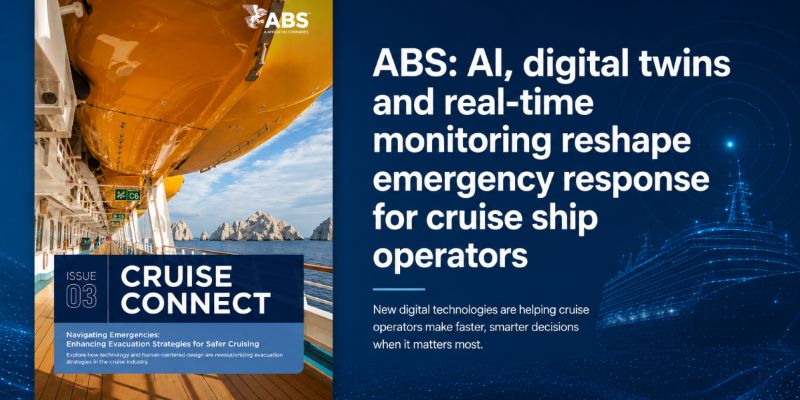
Cruise operators adopting alternative fuels and advanced vessel technologies must rethink emergency response procedures, according to a new publication from ABS. The report emphasizes the need to combine digital tools with enhanced crew training to support future evacuation planning and improve readiness for evolving safety challenges.
The report says fuels such as methanol, hydrogen, LNG and battery systems introduce hazards that differ from conventional marine fuels, requiring evacuation procedures that account for invisible flames, toxic vapours, thermal runaway and changing fire behaviour. It argues that emergency planning should combine technology with human-centred design to help crews make faster and better informed decisions under pressure.
Among the technologies identified are AI-enabled onboard decision support systems that combine data from fire and gas detection, vessel condition sensors and evacuation monitoring into a single operational picture. According to ABS, these systems can track passenger density, monitor muster progress, analyse CCTV feeds for unusual behaviour and assess vessel stability to help crews manage incidents as conditions evolve.Digital twins also feature prominently in the report.
By using live sensor data to mirror vessel conditions, they allow operators to evaluate fuel specific risks, assess evacuation timelines and refine procedures using operational feedback gathered over time. Fire dynamics modelling, passenger evacuation modelling and gas detection systems can further help crews identify hazards, predict congestion and improve route planning before an emergency occurs.
ABS also recommends immersive training using augmented and virtual reality, allowing crews to rehearse emergency scenarios that combine hazard progression with human behaviour. Its Singapore Innovation and Research Center has developed a simulation framework that links hazard modelling, agent-based human response and multi-player virtual drills to test emergency response plans before they are put into practice.
The report concludes: “The future of maritime safety lies in designing, training and leading with safety at the core.” It adds that emergency preparedness should evaluate how hazards, systems and people interact in real time so shipowners can strengthen readiness as new technologies and operating concepts enter service.
Robban Assafina is now on WhatsApp channel. Click Here