_(1).jpg)
A mid growing ambitions to reinforce Dubai’s position as a global maritime hub, Dubai Maritime City (DMC) continues to solidify its role as a vital center for ship maintenance and advanced marine services. In 2025, the city recorded remarkable achievements in expansion, operational capacity enhancement, and the adoption of the latest automation and sustainability technologies; boosting its regional and international competitiveness, amid a planned expansion set to accommodate a projected growth of up to 30%. This includes several new projects expected to be delivered in 2026, reflecting a proactive vision in meeting the evolving needs of the maritime sector.
DMC’s efforts go beyond development and expansion. They also include strategic initiatives such as “Maerifa” networking event, which serves as a vital platform for listening to clients and understanding their needs. The city is also taking tangible steps to promote sustainability and environmental awareness. In line with its vision for a smart, fully automated future, DMC is digitizing its operations by leveraging artificial intelligence and robotics. In this interview, Robban Assafina speaks with two of DMC’s prominent leaders, Abdulla Esam Karmostaji, Senior Manager - Operations, and Muhammad Ibrahim, VP - Sales & Property Management, about the most notable completed projects, current challenges, and the future plans shaping the next phase of Dubai Maritime City.
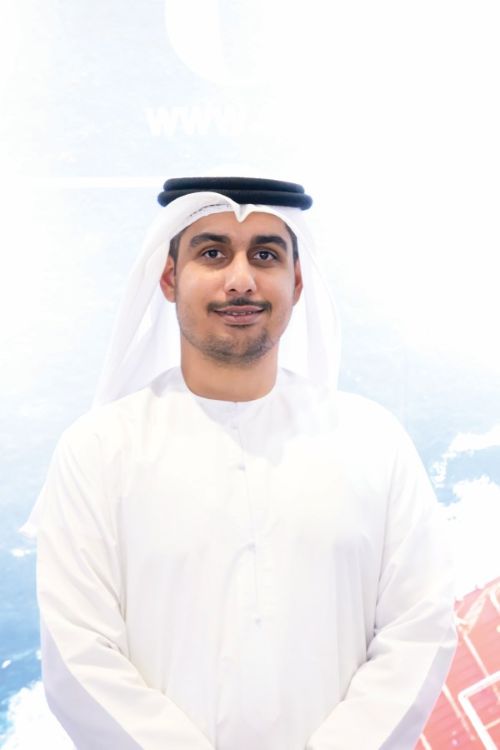
Abdulla Esam Karmostaji

Muhammad Ibrahim
How do you evaluate the development of Dubai Maritime City’s operations and capabilities in 2025?
Abdulla Esam Karmostaji, Senior Manager - Operations at Dubai Maritime City (DMC), stated that “2025 witnessed a significant advancement in the city’s operational capacities and infrastructure, thanks to major investments in equipment upgrades, facility expansion, and the adoption of cutting-edge technologies. Most ship lifting and transfer equipment was retrofitted with upgraded equipment, along with the acquisition of new facilities to enhance capacity and attract more vessels.”
He continued by pointing out the modernization of the ship lift system, replacement of all ship lift hoists, and procurement of new ship cradles, which contributed to lifting over 400 vessels annually and increasing operational capacity from 400 to 500 ships per year. This development positively impacted the number of ship repair and building projects in 2025 and improved the response time for client bookings, continuously enhancing the city's ability to attract more maintenance means.
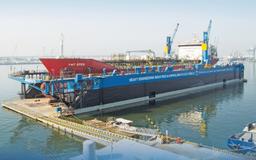
New records were also set in Dubai Maritime City for the largest vessel ever lifted by the 6,000-ton ship lift, being a 130 meters and 6,000 ton vessel, and a 94.5 meters length vessel on the 3,000-ton ship lift, surpassing the previous record of 93 meters, even though the ship lift platform itself is only 90 meters long. This achievement highlights the robustness of the facilities and its ability to accommodate larger vessels.
How do you view DMC’s role in reinforcing the UAE’s position as a global maritime hub?
Speaking about DMC’s pivotal role in developing and stimulating maritime activities in the UAE, Mohammad Ibrahim, Vice President of Sales and Property Management, said: “Dubai’s unique status as a commercial hub is the backbone of Dubai Maritime City. Maritime business contributes around 30% to the nation’s GDP, and DMC is among the top contributors to that figure. This reality is the key driver behind DMC’s current positioning and its constant pursuit of greater excellence. Our vision is to grow alongside our business partners, as our success is tied to theirs. If they thrive, we thrive. That’s the core philosophy we believe in.”
He added that “the first half of the year witnessed intense activity driven by increased business volume, the maritime sector is booming in all aspects. To illustrate our performance level, our occupancy rate reached nearly 100%, this high demand encourages us to expand our operations and upgrade infrastructure to accommodate both existing and new companies joining the area, thereby strengthening our nation’s position as a vital maritime hub regionally and globally.”
What challenges and opportunities do you face in developing DMC’s services?
Regarding the main challenges in developing DMC’s operations and services, Abdulla said: “The biggest challenge we face with clients is that our current expansion does not meet the growing market demand, especially with the rising number of ship maintenance requests."
"Although we continue investing in ship transfer facilities, meeting all maintenance demands remains a challenge. The second issue is the need to upgrade our maintenance infrastructure to keep up with technological progress, while the third challenge relates to the difficulty many shipowners face in managing spare parts for maintenance, this highlights the need to promote a better culture of spare parts management among them.”
Can you highlight the major expansion projects underway at DMC? What are the main objectives of these projects?
Regarding expansion projects, Mohammad Ibrahim stated: “A major expansion project began a year ago and is being executed in sequential phases. We expect the majority of it to be completed by the end of next year, with ongoing work to continue over the following two years. The program spans three years, during which new units and offices will be delivered gradually to meet the increasing needs of businesses. This expansion aims to accommodate a projected growth of up to 30%.”
DMC also recently announced the launch of the second phase of infrastructure development in the industrial zone. This phase aims to enhance support facilities and back new workshops for commercial partners, contributing to a more efficient and innovative working environment. In addition, DMC unveiled a new project featuring 11 state-of-the-art workshops. This step aims to attract more companies and further enrich the maritime business environment. Both projects are expected to be completed by 2026.
Moreover, the city continues infrastructure development works at Dock 2, which include upgrading the existing rails and installing new base plates to enhance stability and operational support for the rail network. This project is scheduled for completion in July 2025, paving the way for a more efficient and sustainable phase in logistics and transport services.
How does "Maerifa" gathering help you understand customer needs and achieve their satisfaction?
“The secret to the success of any partnership lies in the quality of communication; the better the communication, the more effective and successful the partnership becomes,” said Ibrahim, who pointed out that: “Maerifa gathering is not just an event for communication, but a platform through which we listen to our clients, understand their needs, and interact with them effectively. We also make sure to keep them continuously informed about changes in the maritime sector and Dubai in general, whether related to taxes, VAT, or amendments in maritime laws. All of this is part of our responsibility to enable our partners to manage their businesses with greater efficiency and awareness.”
Are there plans to increase the ship handling capacity at DMC to exceed a thousand ships in the coming years, especially with the growing demand for activities and DMC’s aim to strengthen its regional and global position?
Regarding the increase in ship handling capacity, Abdulla said that DMC is currently working to utilize the rising demand for ship maintenance in several ways, including increasing capacity, developing facilities using automation technologies that enhance the efficiency of ship transfer operations, and expanding the number of facilities to increase the number of ship lifting operations and attract a larger number of ships overall.
What projects or plans are you looking to implement in the coming period?
Moving on to future projects, Abdulla said: “We plan to procure additional sets of ship cradles, which will allow for lifting an additional 50 ships annually in line with planned capacity increase. Two additional sets will be ordered, each capable of lifting vessels up to 140 meters in length, with orders placed within the next two months and delivery expected by the end of the year.”
In this context, Ibrahim noted that the projects and activities carried out by DMC enjoy strong support from the government and senior management. He added: “We are currently conducting all necessary surveys, market analyses, and feasibility studies to ensure that the decisions we make today are effective and beneficial for us in the future.”
DMC places great importance on quality certifications, and we noticed that you recently obtained the ISO 9001:2015 Quality Management System certification. How important is this achievement in enhancing the quality and efficiency of the services you provide?
DMC excels in the field of ship maintenance, according to Abdulla, who said: “DMC hosts a large number of maintenance companies. Therefore, it is essential for us to provide ship reservation services through internationally accredited mechanisms that ensure no company is favored over another. We give all companies a fair and transparent opportunity to compete for attracting ships, and we strive to ensure that our booking systems and mechanisms comply with the highest international standards.”
It is clear that sustainability is a key focus in implementing your projects. Could you share with us the most prominent projects you have carried out in alignment with sustainability standards?
In the context of sustainability in operations and DMC’s commitment to implementing projects in accordance with sustainability principles and global environmental standards, Abdulla said: “Among the important projects we have implemented is the industrial wastewater treatment plant for water resulting from ship maintenance activities. Currently, we treat the water produced from these activities, and in the next phase, we aim to launch a water recycling project after treatment is completed. We have already completed the first phase, which is water treatment, and we are working to move to the second phase focusing on recycling, which we expect to begin next year.”
Commenting on this, Ibrahim said: “Since last year, we have taken concrete steps toward sustainability, where most of our buildings are green certified, and the new units we develop hold green building certificates. We also work on raising awareness among our clients and partners about the importance of adopting these environmental initiatives. Currently there are a no. of of vessels being developed that will rely on solar and wind energy. These efforts reflect our deep commitment to preserving the environment and ensuring the safety of the workforce. We also aspire to develop an ideal city for both work and living by improving service facilities such as potable water supply projects, sewage projects, staff housing buildings, and recreational facilities.”
In this regard, the infrastructure project in the wet berth area of DMC was recently completed, including new services such as a 415-meter-long communications network, an 851-meter storm water drainage system, a 440-meter potable water network, and a 400-meter sewage network. This project represents an advanced step toward supporting operations and creating a more efficient and sustainable environment in the area.
Dubai Maritime City places great importance on innovation in various fields to enhance service efficiency and quality. What are the key features of this approach?
Speaking about innovation and its role in improving service quality, Abdulla stated: “Among the projects under the umbrella of innovation, our ship docking is accomplished by using hydraulic systems, which allow us to lift ships by distributing weight precisely and evenly. This distribution gives us the ability to exceed the traditional lifting capacity of ship hoists by avoiding concentration of the load in one point and spreading it across the entire platform.
This allows docking larger ships or those that previously exceeded capacity limits. This project is one of the most prominent completed this year. We have also implemented other projects in automation, through which we developed our control systems to accelerate ship lifting operations. Currently, we are working on future projects based on artificial intelligence aimed at transforming internal systems into automated systems using robotic automation. At present, we focus on booking and invoicing export services, and over time we aim to cover all existing systems in this regard.”
In this context, Dubai Maritime City recently announced the receipt of four new sets of hydraulic blocks, in addition to the existing cradles serving 42 dry berths, to support multiple ships with large capacities up to 6,000 tons, contributing to reducing waiting times for dry dock reservations and improving operational efficiency. The city also announced the successful renewal of the classification of the 3,000-ton ship lift by Lloyd’s Register EMEA, valid until April 12, 2030. This achievement reflects the city’s ongoing commitment to enhancing maritime infrastructure and maintaining the highest global standards in operation and safety.
What role does DMC play in supporting Dubai’s vision as a global maritime hub, and how does it contribute to attracting regional and international maritime companies?
“All economic activities in Dubai depend directly or indirectly on the maritime sector,” according to Abdulla, who explained: “Dubai Maritime City works to facilitate these activities by attracting as many ships and means as possible, that support these activities, ensuring no delays in ship maintenance schedules. We have the responsibility to cover all ship maintenance needs, whether through maintenance companies, spare parts suppliers, or specialized consultants. Therefore, we first focus on attracting companies that provide high-quality services, then facilitate their operations by offering effective services such as ship lifting, and dry and wet dock reservations, which supports attracting more ships to Dubai.”
With the first half of the year coming to an end, what are the main projects you are working on operationally? What strategy are you aiming to achieve in the coming phase?
Regarding the upcoming phase, Abdulla sated: “We have a new order for additional ship cradles to increase the maximum lifting capacity. We are also working on a project to develop the current ship side transfer carriers by upgrading its automation and control systems. Additionally, we have projects to convert power supply sources from diesel to the electrical grid. Our plans also include developing the infrastructure at DMC to facilitate ship maintenance activities more efficiently and sustainably.”
In this context, Dubai Maritime City has activated four substations in the dry dock area with a total capacity of 9.97 megawatts, equipped with 23 electrical distribution panels and 92 power connectors, as well as mobile frequency converters to ensure high operational efficiency. Modern lighting poles have also been installed to improve workflow in the area.
|
:To read the full content, click on the following link Robban Assafina, Issue 97, May/ June 2025, Maritime Host, pg. 78-79 |