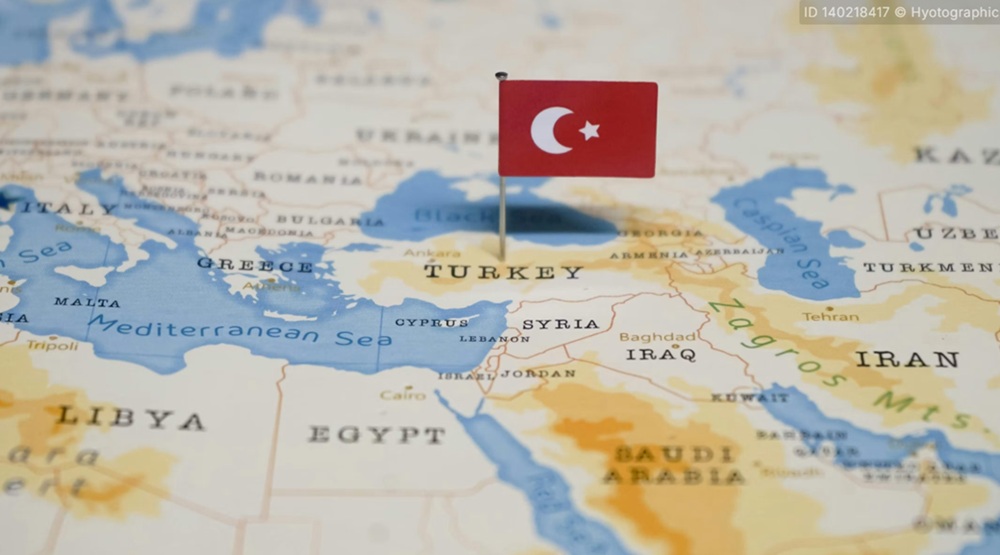
Turkey is taking a major step toward developing an offshore wind industry with the launch of its first offshore YEKA (Renewable Energy Resource Area) tender.
The initiative positions Turkey among a growing group of countries seeking to establish domestic offshore wind industries, creating opportunities across project development, marine construction, ports, grid infrastructure and supply chains.
GlobalData recently reported that the initiative could significantly reshape the country's power generation mix and support its broader energy transition if supported by effective policy, investment and project execution.
Key takeaways
Turkey's renewable energy strategy targets 120 GW of combined solar and wind capacity by 2035, with offshore wind now part of that plan.
The government aims to install 5 GW of offshore wind capacity by 2035 and has identified four potential development zones: Saros Bay, Gökçeada, Bozcaada and Edremit.
A draft 1-GW offshore wind YEKA tender has been released, including long-term licensing provisions and a proposed electricity price range of $0.07-$0.11/kWh.
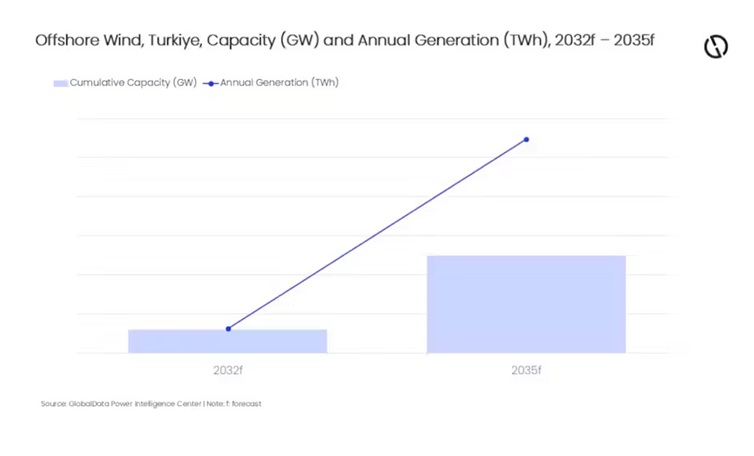
GlobalData forecasts a slower buildout than the government's target, expecting offshore wind capacity to begin entering the energy mix around 2032, reaching only about 1.3 GW by 2035 and generating roughly 2.7 TWh annually.
Challenges to deployment
GlobalData has identified several hurdles that could limit offshore wind growth:
- Lengthy permitting and regulatory processes;
- Need for significant investment in grid connections, subsea cables and supporting infrastructure;
- Financial risks tied to inflation, currency volatility and supply-chain constraints; and
- Technical and environmental challenges, including seabed conditions and marine sensitivities.
According to GlobalData, delays in permitting and grid development are likely to be among the key factors limiting deployment during the next decade.
What is needed to make progress
To close the gap between the government's 5-GW target and forecast deployment, GlobalData recommends:
- Streamlined permitting and clearer approval timelines;
- Early coordination of grid and port infrastructure;
- Financial mechanisms that reduce inflation and currency risks; and
- Incentives that support domestic supply chains and local content.
Robban Assafina is now on WhatsApp channel. Click Here