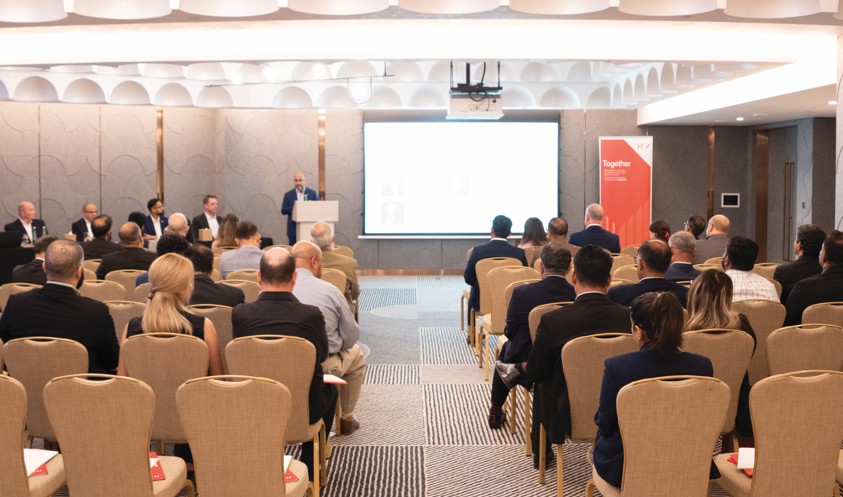
With supply chains becoming increasingly vast and interconnected, the challenges of keeping cargo secure continue to escalate. To address this rising risk landscape, TT Club gathered leaders from logistics, transportation, ports, and e-commerce sectors for a deep dive into current vulnerabilities and the practical measures needed to safeguard the movement of goods across borders.
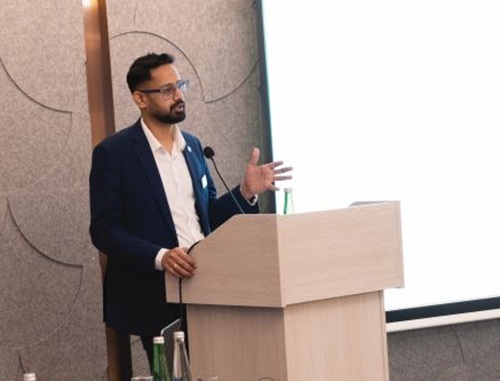
Sudeep Moothedath
Designed as a highly interactive knowledge exchange, the seminar featured expert-led presentations, real-world case studies, and discussions aimed at strengthening collaboration against theft, fraud, and operational tampering within transport and warehousing environments.
Growing Concern, Shared Responsibility
Opening the session, Abdul Fahl, TTMS (Gulf) Director, warned that increasing theft is no longer an isolated concern but a widespread industry challenge, stating that “prices are rising everywhere. Criminals are exploiting every vulnerability left open in the logistics chain. Our objective today is to share insights and best practices that help you enhance resilience and secure your operations”.
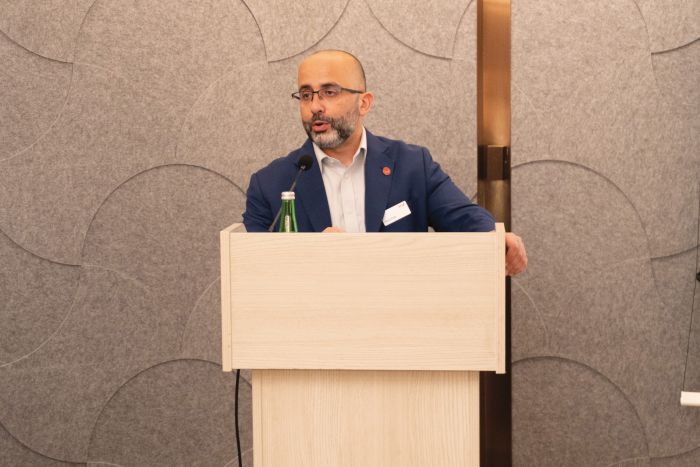
Abdul Fahl
He introduced TT Club as a mutual, member-owned, not-for-profit insurer, operating since 1968, dedicated to protecting members’ assets and liabilities. Managed by Thomas Miller, TT Club works closely with international trade bodies to promote global safety standards, risk management, and loss prevention.
Abdul also stressed the importance of education, awareness, and preventative strategies, particularly the role of the loss prevention team, in reducing incidents often caused by human error.
Where Crime Is Rising? And Why?
Taking the stage next, Joshua Finch, Logistics Risk Manager, TT Club London; presented fresh global data from TT Club and its intelligence partner BSI, confirming a notable surge in cargo theft worldwide. The United States has seen the most dramatic rise through 2024–25, while Western Europe, especially the UK, Italy, Spain, Germany, and France, continues to face increasingly sophisticated criminal activity. Across these regions, thieves are focusing on goods that can be resold quickly, such as electronics, food and beverages, high-value metals including copper, and automotive parts like tires.

Joshua Finch
Finch emphasized that criminals understand both the market and the weaknesses in the supply chain, highlighting that TT Club and BSI issue comprehensive annual reports to help companies better understand emerging risks, and urged attendees to make full use of the prevention resources provided during the seminar.
The Legal Landscape
Speaking from the legal front, Omar N. Omar, Partner and Head of Transport & Insurance at Al Tamimi & Company, highlighted a critical issue: large gaps in inland regulation leave many incidents unreported, unresolved, or totally undetected.
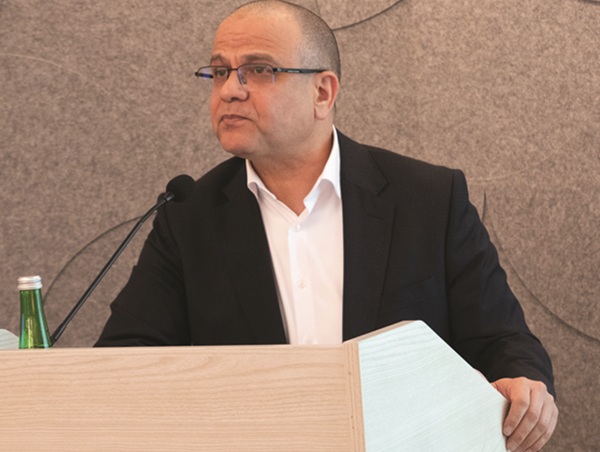
Omar N. Omar
Despite advances in marine, port, and aviation law, Omar stressed that transit and warehousing regulations remain outdated globally. He noted that while commerce and logistics are evolving rapidly, the law has not kept pace, with many systems still relying heavily on general legal principles that fail to address today’s highly integrated supply chains.
He also called for stronger alignment, emphasizing that every product consumers buy, moves through the supply chain and must be properly regulated and protected.
Challenges and Long-Term Risks
During the seminar, presenters highlighted several persistent challenges in the sector, including regulatory complexity, geopolitical risks, resource constraints, technology gaps, limited visibility, poor stakeholder coordination, data overload, and outdated risk management practices.
Looking further ahead, the seminar identified several long-term risks that could shape supply chains over the next five to ten years, including climate change, advanced AI adoption, economic fragmentation, and the transition toward sustainable, circular supply chains.
Looking to the Future
During the seminar, speakers highlighted that the global supply market is expected to continue growing at an 11.2% CAGR from 2020 to 2027, with digitalization and automation at the forefront of industry priorities. While post-pandemic losses from disruptions have gradually declined, they remain substantial.
At the same time, cybersecurity threats, particularly supply chain attacks and third-party breaches, have surged, now accounting for up to 30% of all data breaches, with average incident costs exceeding USD 4.88 million per event in 2025.
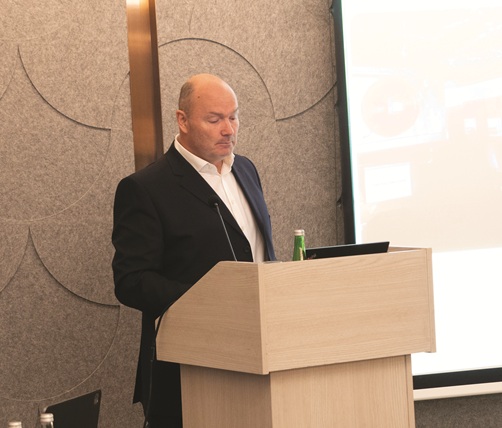
Paul Raw
Organizations are evolving toward multi-shore sourcing, increased automation, and improved monitoring, reflecting a long-term focus on resilience. Yet despite technological progress, only 6% of companies currently achieve true end-to-end supply chain visibility, while 57% cite poor visibility as their primary challenge.
A United Stand Against Cargo Crime
The seminar reinforced that collaboration, proactive risk management, and regulatory alignment are critical to safeguarding global supply chains. By sharing insights, strategies, and practical tools, TT Club aims to empower operators across the region to anticipate threats, reduce vulnerabilities, and strengthen resilience for the challenges of today and tomorrow.
|
To read the full content, click on the following link: Robban Assafina, Issue 100, Nov/Dec 2025, Maritime Host, pg. 61-62 |


.jpg&w=256&q=75)