
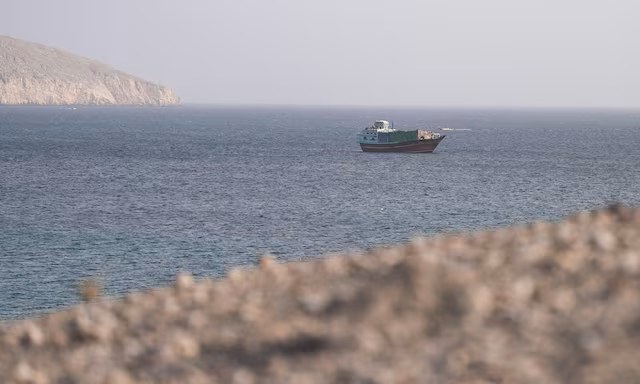
Shipping activity through the Strait of Hormuz fell to its lowest level in months on Thursday, with only three commodity vessels completing the passage, according to shipping data. The decline reflects widespread vessel halts and route reversals following recent attacks on ships and the resumption of a U.S. blockade targeting Iran-linked maritime trade.The re-escalation in fighting between the U.S. and Iran has once again largely stopped traffic through Hormuz, the world's most important shipping route for oil and gas, driving up global energy prices.
Miraan, a sanctioned product tanker carrying fuel oil, and Norita, a small vessel carrying liquefied petroleum gas, exited the strait on Thursday via the Iranian route but stopped at the Gulf of Oman, where the U.S. blockade is, Kpler data showed as of 0513 GMT on Friday.
Arolia, a bunkering tanker laden with Iraqi fuel oil that is used to refuel vessels at sea, made a U-turn to head back into the Gulf hours after it exited earlier on Friday, LSEG data showed.
On Wednesday, 11 vessels crossed the strait, a fraction of the average of 125 vessels that transited the waterway daily before the war.There were no Very Large Crude Carrier or liquefied natural gas tankers passing through the strait for a second day on Thursday.
However, two VLCCs re-appeared on AIS tracking on Thursday outside the strait, carrying 2 million barrels of crude each.
The VLCC Colombia Prosperity, laden with Saudi crude, is heading to Okinawa in Japan, while the Costa Rica Prosperity, carrying Iraqi Basra Medium crude, is destined for Turkey, the data showed.
Kpler's database showed that the tankers crossed the strait on July 13, while S&P Global Energy assessed that they exited on July 14.
Iraq briefly suspended oil loadings on Thursday after a drone hit an oil tanker at its Basra terminal, four Iraqi oil and security sources told Reuters, before later resuming them.
Iran's Revolutionary Guards said on Thursday no oil or gas would be exported through the Strait of Hormuz as long as U.S. attacks continued, Iran's Tasnim news agency reported.In a further threat to energy supply, Tehran has signalled it could prod its Houthi allies in Yemen to close another key strait, the Bab al-Mandeb at the mouth of the Red Sea, sources told Reuters, if Washington attacks Iran's infrastructure.
Robban Assafina is now on WhatsApp channel. Click Here


