South Korea’s leading naval shipbuilders, HD Hyundai Heavy Industries (HD HHI) and Hanwha Ocean, are preparing to compete for major contracts under Saudi Arabia’s naval modernization program, valued at more than 8 trillion won ($5.5 billion), despite missing out on Canada’s submarine procurement project. The two companies are expected to split bids across the Saudi program while strengthening their positions in an increasingly competitive global defense shipbuilding market.
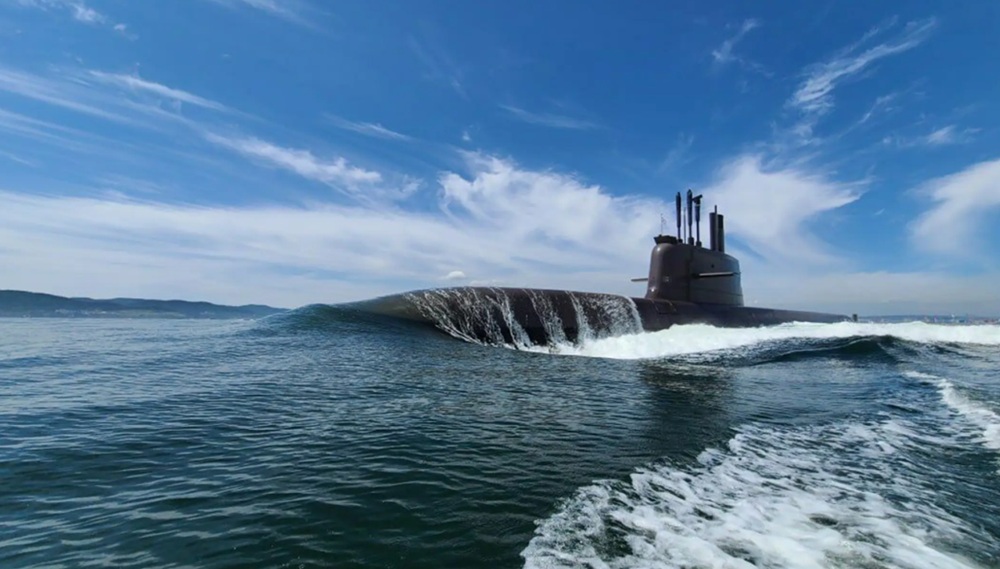
HD HHI has tentatively been assigned to bid for the frigate contract, while Hanwha Ocean will pursue the submarine portion of the Saudi project, according to the shipbuilding industry on Wednesday. The two Korean shipbuilders are likely to compete against European shipbuilders.
“The two companies have reached a broad understanding to participate by focusing on their respective strengths,” an industry representative said.
Saudi Arabia is mulling over the purchase of five 6,000-ton frigates valued at roughly 3 trillion won and four to six submarines worth around 5 trillion won. The winning bidders could be selected as early as this year.
Industry sources expect leading European naval shipbuilders, including Germany’s TKMS, France's Naval Group, Spain's Navantia and Italy's Fincantieri, to compete for the contracts.
Success in Saudi Arabia is expected to hinge not only on vessel performance but also on bidders' contributions to the local defense industry, much as it was a key factor for Canada’s submarine procurement program.
HD Hyundai has put considerable effort into strengthening its foothold in Saudi Arabia by establishing the International Maritime Industries shipyard through a joint venture with Saudi Aramco and other local partners. More recently, it signed a memorandum of understanding with Saudi marine engine company Makeen to expand cooperation on naval vessel projects.
Hanwha has also stepped up its local presence.
Hanwha Ocean, Hanwha Aerospace and Hanwha Systems used the World Defense Show 2026 in Riyadh in February to showcase an integrated defense portfolio covering land, naval and air systems. Hanwha also signed memorandums of understanding with local energy and defense technology companies.
Competition for overseas naval contracts is expected to intensify across Southeast Asia and Europe.
“Large-scale projects like those in Canada and Saudi Arabia can be pursued as 'Team Korea,' but in smaller programs, the companies will inevitably have to compete against each other,” another industry source said.
Thailand's next-generation 4,000-ton frigate program will be the first battleground. HD HHI and Hanwha Ocean are both vying to build the lead vessel, worth roughly 800 billion won, ahead of follow-on orders that could significantly increase the project's value. Thai media have reported that the winning bidder has already been selected and could be announced later this month.
HD HHI has highlighted a plan to achieve a 40 percent local construction rate, while Hanwha Ocean has emphasized its previous experience building vessels for the Royal Thai Navy.
Greece is also planning to acquire four next-generation submarines to replace its aging fleet. The market presents a formidable challenge for Korean shipbuilders, given the longstanding dominance of Europe-based defense contractors. Although the tender has yet to take shape, Germany's TKMS and Sweden's Saab are widely seen as leading contenders.
As Greece requires ships to be built domestically, both HD Hyundai and Hanwha Ocean have signed memorandums of understanding with local shipyards.
Korean shipbuilders are likely to compete for overseas naval contracts, as submarine procurement programs are also expected in the Philippines and Egypt.
“The government should play the role of mediator by encouraging the companies to capitalize on their respective strengths — HD Hyundai's strength in surface warships and Hanwha Ocean's edge in submarines — when pursuing overseas deals,” Moon Keun-sik, a retired Korean Navy colonel and special professor at Hanyang University's Graduate School of Public Policy, said.
“Although Korea fell short in Canada's submarine competition, its shipbuilding technology has earned international recognition. Korean companies are fully capable of competing globally against European rivals that are struggling with order backlogs.”
Robban Assafina is now on WhatsApp channel. Click Here