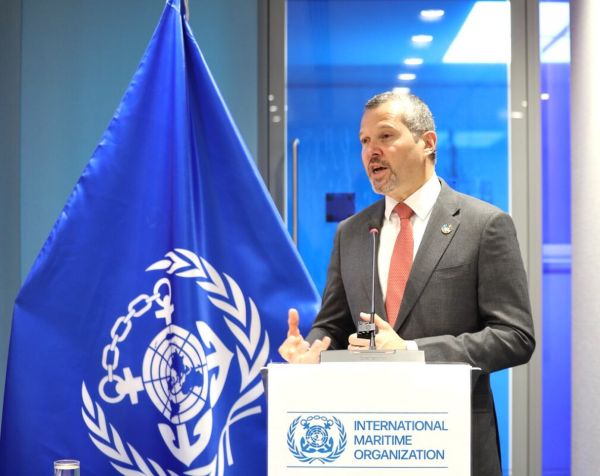
The International Maritime Organization (IMO) faces a complex landscape in 2026, shaped by geopolitical tensions, rising security risks, urgent decarbonisation goals, and the continuing challenge of seafarer welfare, IMO Secretary-General Arsenio Domínguez told a recent press briefing.
Reflecting on his first full year in office, Domínguez described 2025 as “an interesting year for IMO” with shipping navigating difficult waters both literally and figuratively.
Geopolitical risks remain front and centre, especially in conflict-affected areas. The Red Sea situation, which caused significant disruption, has somewhat softened, with major players such as Maersk and CMA CGM “steadily returning” to the region, though “with caution”, Domínguez said.
He warned that “we still need to maintain cautiousness” and urged all ship operators to remain “very vigilant”.
By contrast, the Black Sea remains volatile, with recent attacks on vessels impacting seafarers and port workers alike. Domínguez confirmed IMO’s ongoing engagement with the UN Security Council to explore ways of protecting vital maritime operations there, noting: “We continue to engage with the UN Security Council on any actions that are possible to introduce or put in place to safeguard operations”.
The suspension of the Black Sea Grain Initiative further complicates the picture, and while IMO possesses “experience and expertise” in vessel inspections and safety, political developments will dictate the path forward, Domínguez affirmed.
A broader issue highlighted by Domínguez is the persistent threat of substandard shipping. Recent vessel sinkings in the Caribbean have exposed “ships with fraudulent registrations”, undermining the enforcement of IMO conventions.
In response, he noted ongoing work in IMO’s Legal and Maritime Safety Committees to develop “best practices for ship registration” aimed at clarifying flag state responsibilities.
Discussing the “dark and shadow fleet”, Domínguez emphasised that IMO’s focus is not on sanctions but on safety and compliance, stating: “At IMO we don’t deal with sanctions… we only follow those introduced by the United Nations Security Council”.
A scoping exercise reviewing IMO instruments on this matter will be presented in March to guide potential regulatory updates.
On the climate front, Domínguez urged the industry and regulators to “focus on the substance” of the IMO’s net zero framework amid ongoing debates about fuels such as LNG and biofuels and emerging technologies including wind, solar and nuclear propulsion.
“Let’s look at the substance of what we have on the table”, he said, calling for consensus to “progress and make the decisions we can at this stage,” he commented.
The human element also took centre stage. Domínguez expressed deep concern about the rising number of abandoned ships, now exceeding 400 cases affecting over 6,200 seafarers.
“Still one too many, as you would expect me to say”, he remarked. He also highlighted the growing criminalisation of seafarers linked to illegal trade, with the IMO adopting guidelines to protect their rights and due process.
Looking ahead, the IMO is advancing work on the Maritime Autonomous Surface Ships (MASS) Code, expected to be implemented voluntarily at first, to gain experience before moving toward mandatory regulation.
“Cybersecurity and cyber risks” will be a key part of this digital transformation, ensuring that “automation or digitalisation… is particularly safe”, Domínguez said.
On workforce issues, Domínguez pointed to a looming shortage of qualified seafarers and the difficulty of recruiting new talent in the face of safety concerns. Referencing the IMO’s gender survey, he said: “We still need to find better ideas on how to attract the new generation to come into seafaring”.
Despite the myriad challenges, Domínguez emphasised the resilience of global shipping.
“With all the challenges that we experienced in 2025, trade still increased by 1.1 per cent.”
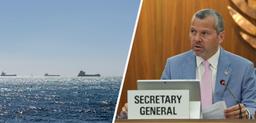
IMO Secretary-General Arsenio Domínguez
“It may sound very small, but compared with other sectors and all the challenges we’ve been through, I think we keep demonstrating that we not only serve everybody, but we adapt,” Domínguez continued.
As he looks ahead, Domínguez pledged continued open dialogue with member states, industry stakeholders and NGOs, reiterating IMO’s commitment to “building partnerships” and ensuring shipping remains “relevant and resilient” in a rapidly changing world.