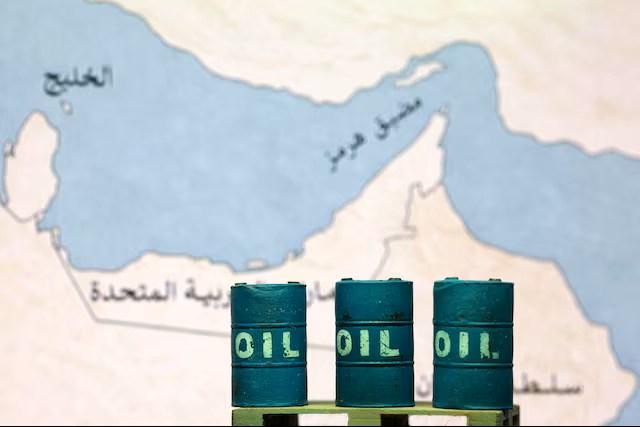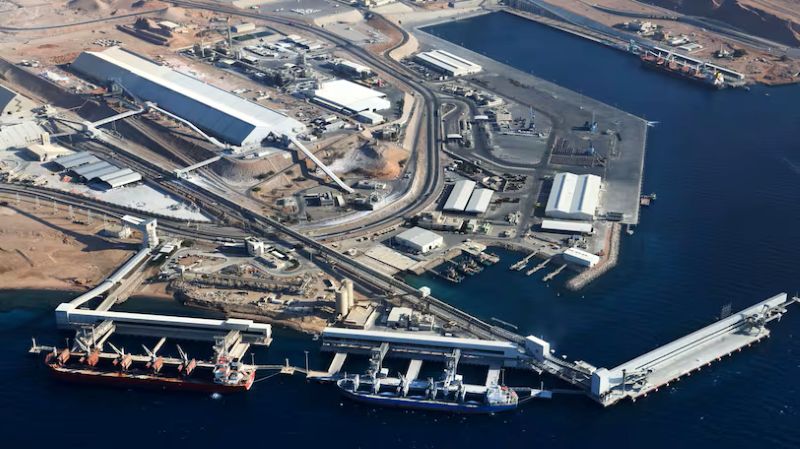
Jordan’s Port of Aqaba, the kingdom’s only maritime gateway, has assumed greater strategic significance as tanker traffic through the Strait of Hormuz remains effectively halted, increasing reliance on alternative regional shipping routes.
The role was highlighted this week after the US embassy in Amman warned of a “specific and credible” threat to the port and adjoining airport, though Jordan denied reports of an evacuation and said operations were continuing normally.
This came after Iran continued to launch missile attacks across the Middle East following the breakdown of a temporary ceasefire agreement signed by Iran and the US last month.Jordanian authorities, however, said they had not issued decision to evacuate the airport or seaport in Aqaba and that normal operations were continuing at both sites, Reuters reported.
Arab Gas pipeline
The Aqaba port is a major energy and logistics hub, with a 1,200km Arab Gas pipeline that connects Egypt with Jordan, Syria and Lebanon. Another pipeline connecting Jordan and Iraq is in the planning stage.
The port is important to global energy markets because of the presence of the Arab Gas pipeline that was built to supply Egyptian gas to markets in the Middle East including Jordan, Syria and Lebanon, as well as to Israel through the Arish-Ashqelon pipeline.
Syria signed an agreement this year to buy about four million cubic metres of gas per day from Jordan that will be delivered to Damascus through the pipeline for power generation.
Last year, Lebanon also signed a preliminary agreement with Egypt to import natural gas to ease electricity shortages and reduce its reliance on high-cost fuel oil imports, highlighting the strategic importance of the pipeline and the port.
New pipeline plans
The crisis in the Strait of Hormuz also prompted Jordan and Iraq to revive an old pipeline plan linking Basra in Iraq with the Port of Aqaba to enable Baghdad to export its crude and bypass the strait, as the narrow water channel in the Arabian Gulf remains virtually shut amid Iranian attacks.Iraq and Jordan signed an agreement in 2013 to build the pipeline, estimated to cost about $18 billion.
It was due to be completed in 2017 but was delayed in 2014 due to the ISIS occupation of much of western Iraq. The project was revived in 2019 but was postponed again soon afterwards due to the Covid pandemic.
The latest version of the project, Jordanian state media reported, is a pipeline network in two sections. A 700km section would connect the Rumaila oilfield near Basra to the western city of Haditha, with a capacity of 2.25 million barrels per day. The second section, running from Haditha to Aqaba, would carry one million bpd.
Vital gateway for trade
The port of Aqaba is also Jordan’s dominant gateway for foreign trade, handling about 80 per cent of the kingdom’s exports and 65 per cent of its imports. It is also a vital trade transit point for Saudi Arabia and Iraq.
In February, AD Ports Group signed a 30-year concession agreement with Aqaba Development Corporation (ADC) to manage and operate the Aqaba Multipurpose Port, with plans to invest Dh141 million ($38.4 million) in a joint venture that is being set up to operate the port.
The port handles a diverse range of cargo, including general freight, grain, livestock, Ro-Ro and project cargo. The port has an annual handling capacity of 11 million tonnes, supported by nine berths, a 2-kilometre quay and a draft of 13.5 metres. Last year, the terminal handled more than 5.3 million tonnes of cargo and nearly 85,000 car-equivalent units of Ro-Ro imports.
Robban Assafina is now on WhatsApp channel. Click Here