
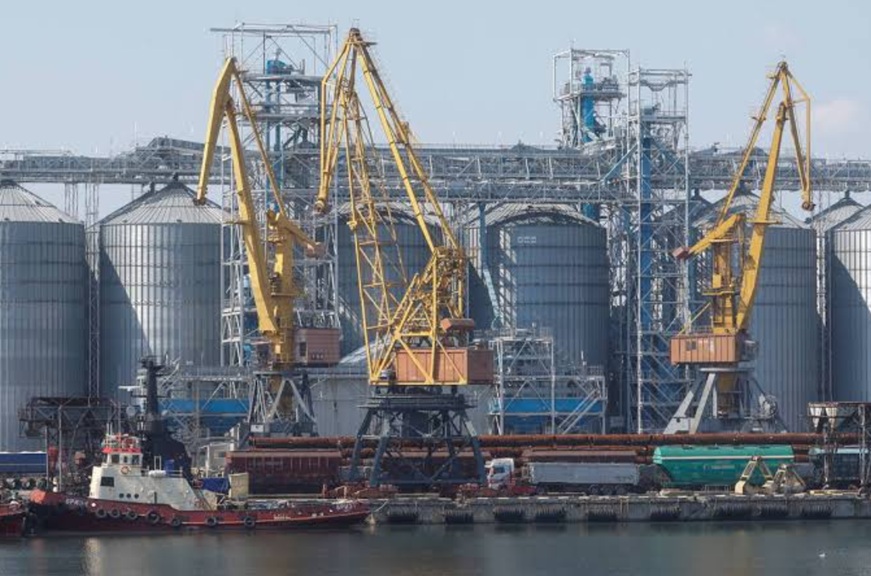
Ukrainian seaports increased cargo handling in the first half of the year despite constant Russian attacks, although grain exports remain under growing pressure. According to the Ukrainian Seaports Administration, Ukrainian ports handled 42.4 million tons of cargo in the first six months of the year. This is 6% higher than in the same period of 2025.
Agricultural products traditionally accounted for the largest share of cargo flow. In January-June, Ukrainian ports handled 23.6 million tons of grain and other agricultural products, up 20% year-on-year.
The Ukrainian Seaports Administration said the results were achieved through the joint efforts of port workers, farmers, carriers, sailors, and the Ukrainian military, who continue to ensure the safety of shipping.
At the same time, Russia continues to systematically attack civilian port infrastructure. Since the beginning of the full-scale invasion, Russian strikes have damaged or partially destroyed 1,002 port infrastructure facilities and 221 civilian vessels. The attacks have injured 283 civilians. Russian strikes intensified sharply in July.
In just two weeks, Russia carried out 23 attacks on Ukrainian ports and 17 strikes on civilian vessels. As a result, 11 people were killed, and seven others were injured. The victims included port workers, employees of maritime enterprises, and foreign crew members of civilian vessels.
According to the Ministry of Development, shipping dynamics through Ukraine’s sea corridor have worsened since the end of June. Since the corridor was launched in September 2023, total transshipment had exceeded 208 million tons as of July 15.
However, while daily transportation previously ranged from 210,000 to 240,000 tons, it has fallen to about 160,000 tons since the end of June. Agricultural analysts say Ukrainian farmers have increasingly refused to sell new-crop grain because of a sharp decline in purchase prices.
One reason for this market reaction is disruption to export logistics following recent attacks on port infrastructure. The strikes prompted shipowners to cancel freight agreements and insurers to suspend war-risk coverage. This is increasing pressure on Ukrainian farmers and creating risks for Ukraine’s position in traditional export markets, where EU competitors can quickly replace Ukrainian products.
The situation shows that while Ukraine’s ports remain operational and resilient, Russia’s attacks continue to threaten the stability of agricultural exports, logistics costs and foreign-currency earnings.
Robban Assafina is now on WhatsApp channel. Click Here


