Marine insurance coverage for vessels transiting the Strait of Hormuz is becoming more costly and subject to stricter conditions, as underwriters at Lloyd’s Market Association introduce an optional policy clause allowing insurers to cancel coverage if a shipowner is found to have paid a transit toll to Iran.
The measure is aimed at reducing insurers’ compliance risks and could, if adopted, affect the use of Iranian waters by neutral shipowners.
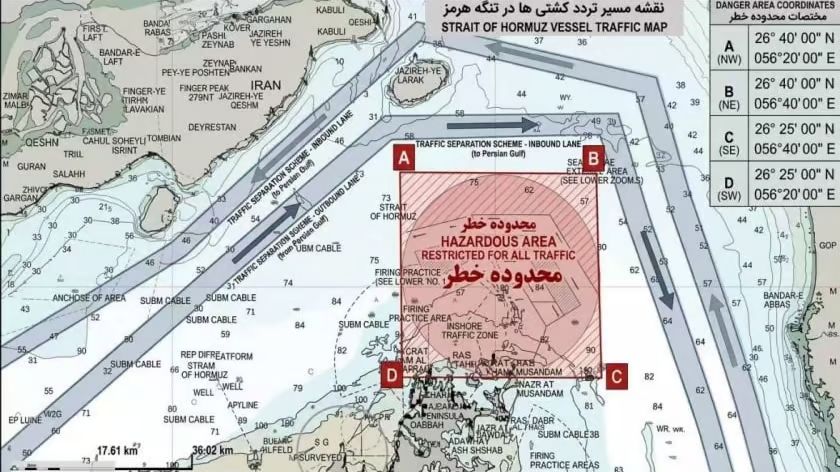
For the insurer, the hazard is clear. The Islamic Revolutionary Guard Corps Navy oversees Iran's section of the strait, and the IRGC is a U.S.-designated foreign terrorist organization. The administrative transactions for passage are handled through Iran's so-called Arabian Gulf Strait Authority (PGSA), not itself part of the IRGC but still a division of Iran's government.
Iran is not currently charging for transits of the strait, but its leaders have expressed a clear interest in turning the waterway's operations into a revenue stream in the long term. As tolling is questionably legal in an international strait, the charges could be presented as a "fee" structure, linked to some form of services rendered for safe transits. At least one prominent shipowner has suggested that it would be a good business decision to accept Iranian control and simply pay the fee as a cost of operations.
Payments to the PGSA might be rendered in bitcoin or yuan to keep a low profile, but the funds would ultimately end in the hands of the Iranian banking system and government - and quite possibly the IRGC. Any payment would be a U.S. sanctions violation, and might have other compliance ramifications as well.
For an insurer, this would be a reputational and legal risk. A spokesperson for the LMA told Insurance Business that the new tolling clause sets out "a clear contractual position for insurers and insureds" on the acceptability of such payments. If they are discovered, the ship's cover would be canceled.
"The LMA has developed the clause in response to concerns about applicable sanctions and terrorism legislation arising where insurers become aware, or through appropriate due diligence ought reasonably to become aware, that any financial or non-financial payment has been given by the insured," the association said in a statement. ""Under the clause, insurers will not cover any such payment. In addition, where a payment has been made, cover for the relevant vessel will cease due to the risk of a breach of sanctions and/or terrorism legislation in the US, UK or EU."
Meanwhile, costs of cover are escalating. Reuters reports war risk premiums for Gulf coverage at 3 percent of hull value in early July, and after more recent attacks, some sources indicated that pricing would likely be quoted at 5 percent or more. Prices in this range are a deterrent for trade, as they raise the cost of shipping and can effectively price some commodity trades out of the market.
Per Insurance Business, in the southern sector of the Red Sea - where Houthi rebels have initiated a campaign against Saudi shipping - premiums have risen to 1 percent of hull value. This is north of $1 million per transit for a newer VLCC.
Robban Assafina is now on WhatsApp channel. Click Here