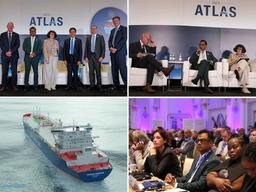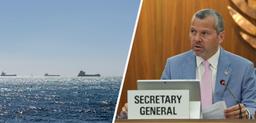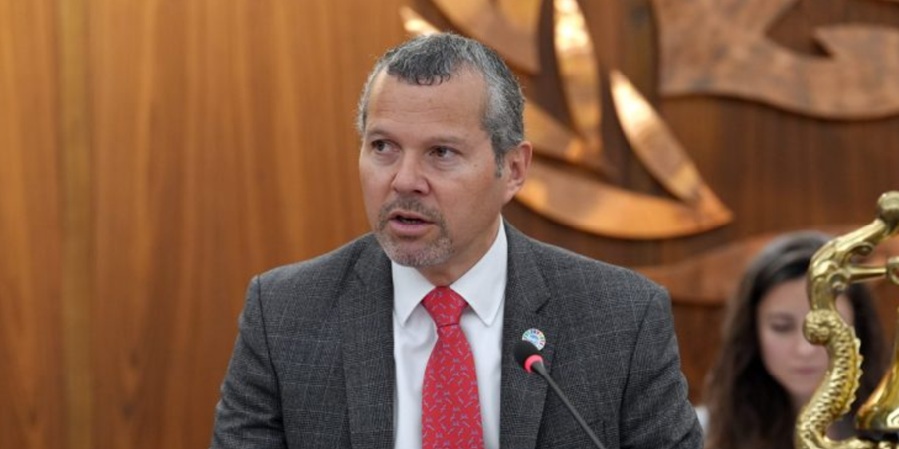
At the opening of the 113th session of the Legal Committee (LEG 113) of the International Maritime Organization (IMO), Secretary-General Arsenio Dominguez issued a stark warning over the deteriorating security situation in and around the Strait of Hormuz, highlighting both humanitarian and economic consequences.
Speaking in London to delegates attending LEG 113 (13–17 April), Dominguez described the situation in the Strait of Hormuz as being of “grave concern,” noting that thousands of seafarers remain stranded aboard vessels in the Persian Gulf under significant risk and psychological strain.
He emphasized that the crisis extends beyond immediate human impact, warning of broader disruption to international shipping routes, global trade flows, and food security.
Council principles reaffirmed amid maritime insecurity
The Secretary-General recalled that an extraordinary session of the IMO Council held in March had reaffirmed key principles intended to guide international responses to the crisis. These include the protection of freedom of navigation, the safety and welfare of seafarers, and the rejection of the use of merchant shipping as collateral in geopolitical conflicts. The Council also underscored the importance of diplomatic engagement to de-escalate tensions in the region.
Ongoing IMO engagement and coordination efforts
Dominguez said he had initiated internal work with IMO teams and engaged relevant stakeholders to explore mechanisms to address the crisis. He stressed that any measures would align with the established Traffic Separation Scheme in the region, in place since 1968 and jointly coordinated by Oman and Iran, while fully respecting international maritime law, including the right of innocent passage.
He reiterated the IMO’s commitment to multilateralism and sustained diplomatic dialogue, calling for continued cooperation to restore stability and safeguard seafarers operating in high-risk waters near the Strait of Hormuz and the wider Persian Gulf.
"I would like to thank you for your continued support, which I highly value and appreciate. We remain committed to multilateralism and sustained dialogue, and I look forward to maintaining our engagement on this important issue for the benefit of innocent seafarers and international shipping"
… said Dominguez.
Legal Committee agenda focuses on seafarers, ship standards, and new fuels
Turning to the Committee’s agenda, Dominguez highlighted a standalone item on the fair treatment of seafarers, describing it as highly relevant to ongoing Council discussions. He said the issue reflects continued concern over working conditions, legal protections, and the safety of maritime workers operating under strain.
Delegates will also consider proposals for developing guidelines and best practices on ship registration, with the Secretary-General stressing the importance of maintaining high-quality shipping standards to ensure compliance with the IMO regulatory framework.
Another key item involves a regulatory scoping exercise related to substandard ships, aimed at strengthening enforcement and closing gaps in oversight.
In addition, the Committee will examine the suitability of existing IMO liability and compensation regimes in the context of alternative marine fuels, as the global shipping sector accelerates its transition toward decarbonization and environmental sustainability.
Robban Assafina is now on WhatsApp channel. Click Here