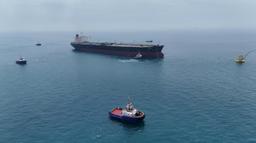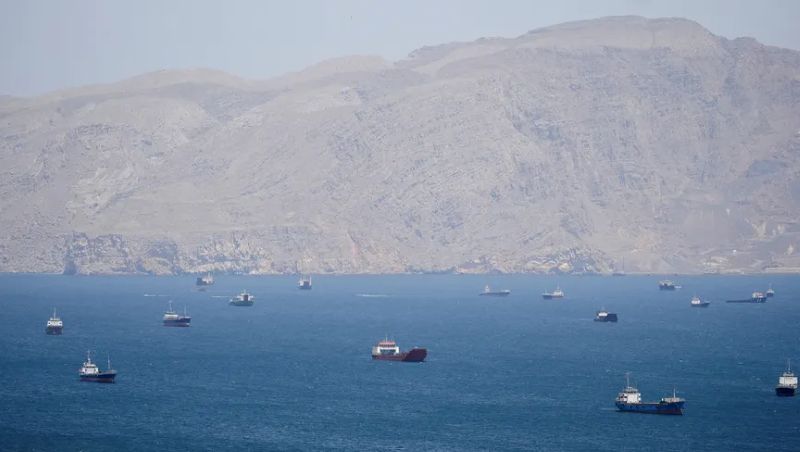
Hundreds of ships were seen piling up near Dubai on Tuesday, while others steered clear of the still largely empty Strait of Hormuz, as Iran sought to expand its control.
The ceasefire between the United States and Iran began to look increasingly fragile, as the two sides exchanged fire even as the United States announced it had opened a corridor through the waterway, and CBS reported that two American destroyers had crossed into the Arabian Gulf.
Ship crew members reported hearing radio messages warning of new borders being imposed by the Iranian Revolutionary Guard.
In contrast, the attacks on the port of Fujairah in the UAE highlighted the expanding scope of Iranian control, leaving the Strait of Hormuz almost devoid of shipping traffic in the early hours of the day.
Defining the geographic scope of the new control
Dubai lies outside the new control zone of the Strait of Hormuz, as defined by Tehran, which extends south to Umm al-Quwain along the coast of the United Arab Emirates .
“The US is trying to rebalance power in the Strait, and this has been met with a similar response from Iran. This is an escalation,” said Anup Singh, head of global shipping research at Oil Brokerage. “I don’t expect a quick reopening of two-way shipping through the Strait.”
Daily crossing rates in the strait collapse
The Strait of Hormuz, a vital energy chokepoint, has become a major flashpoint in the nine-week-old conflict. Traffic has declined since the start of the US and Israeli strikes on Iran, but it has continued to fluctuate as either side attempts to adjust its control.
The number of daily crossings through the Strait of Hormuz has now dropped to almost zero, compared to about 135 crossings per day before the war.
Market turmoil and falling benchmark indices
The prolonged closure of the Strait of Hormuz has disrupted global shipping markets, with benchmark indices used for decades losing their ability to reflect reality overnight, and at least one major trading company filing a lawsuit against the index's publisher over the losses.
Singh said that if the US succeeds in directing more ships to leave the Strait, opening a passage for the hundreds of oil and chemical tankers stranded in the Gulf could ease pressure on the market. However, this week's events have only increased the shipping sector's caution.
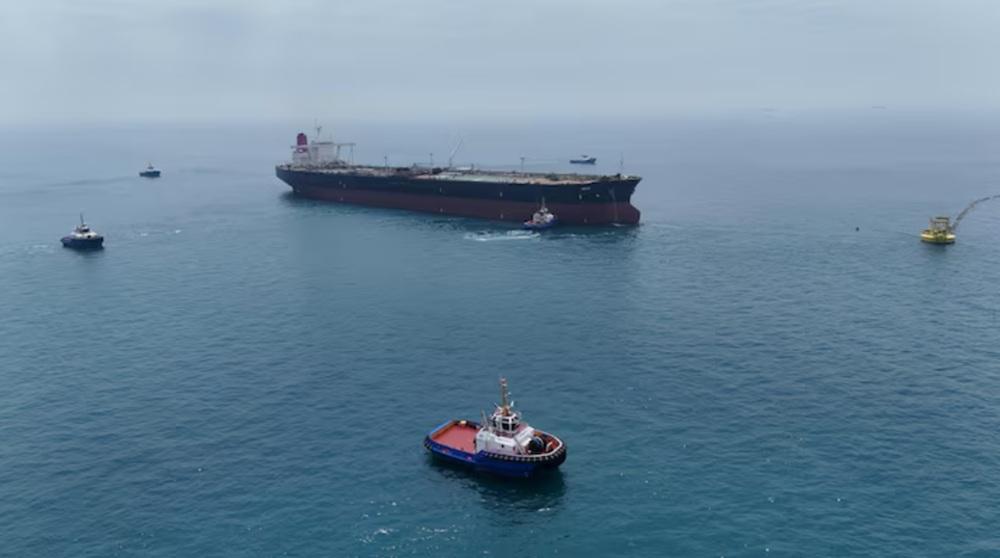
Abu Dhabi National Oil Company ( ADNOC ) confirmed on Monday that its supertanker "Barakah" was attacked by drones while in the Strait of Hormuz, and South Korea said one of its ships was targeted for the first time during the war.
Robban Assafina is now on WhatsApp channel. Click Here